Why Your Home Never Feels Finished
5/31/20268 min read
There is a specific feeling that comes from a home that is almost done but never quite there.
You have been decorating for years, possibly, and the rooms are furnished and the walls are not bare and the surfaces have things on them. But the home does not feel finished. There is always one more thing it needs. One more piece that will resolve it. One more purchase that will be the thing that finally makes the room look right. And then you buy it, and the room absorbs it, and the feeling persists.
This is one of the most common and most exhausting experiences in home decorating. It is also almost never a decorating problem. It is a process problem. The home never feels finished because the decisions were made in the wrong order, or because there was no agreed point at which finished would be declared, or because the process of improving the home became a habit that substituted for the outcome it was supposed to produce.
The fix is not a new purchase. It is understanding the order in which decisions should be made and recognising the point at which the home is, in fact, done enough to stop.
Why the Unfinished Feeling Exists
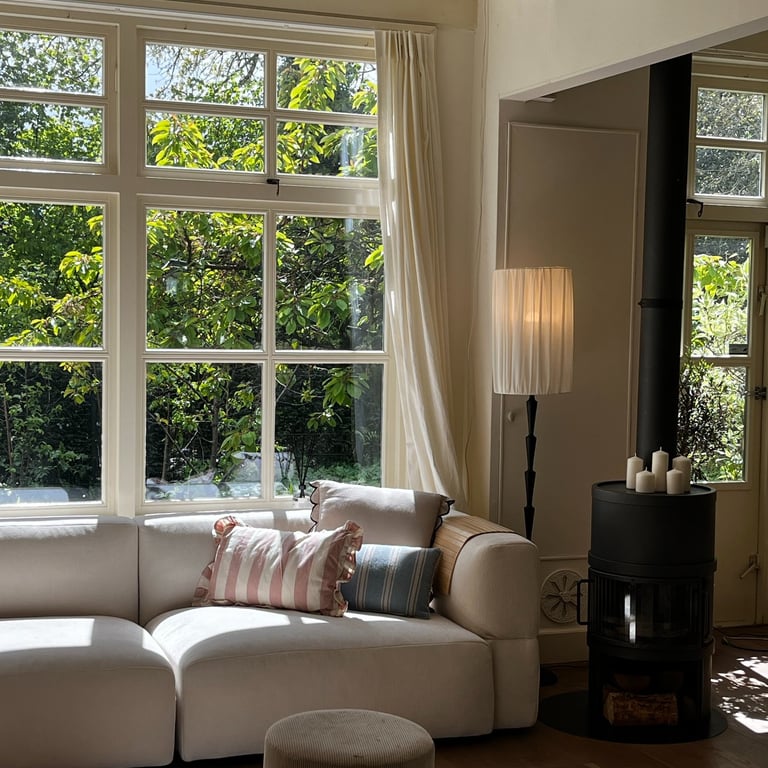
The unfinished feeling is not a reflection of how much has been done. It is a reflection of how the decisions were sequenced. A home where the anchors came first, the large pieces that establish scale and proportion and set the direction for everything else, and the layers and accents followed in the right order, will feel finished when it is finished. A home where accent pieces arrived before anchors were settled, where trends were followed mid-project, where adding was the default response to anything that felt off, will feel like it is always one thing away from done.
The feeling is also self-perpetuating. When a room does not feel finished, the instinct is to buy something. The purchase provides a brief sense of progress. The room absorbs it. The feeling returns. The cycle continues. The room acquires more objects without ever arriving at the settled quality that finish actually requires.
Recognising this cycle is the beginning of breaking it. The home that never feels finished does not need more things. It needs a different process and a decision about when done is done.
Five Reasons Your Home Never Feels Finished
1. You bought the accent pieces before the anchors were settled
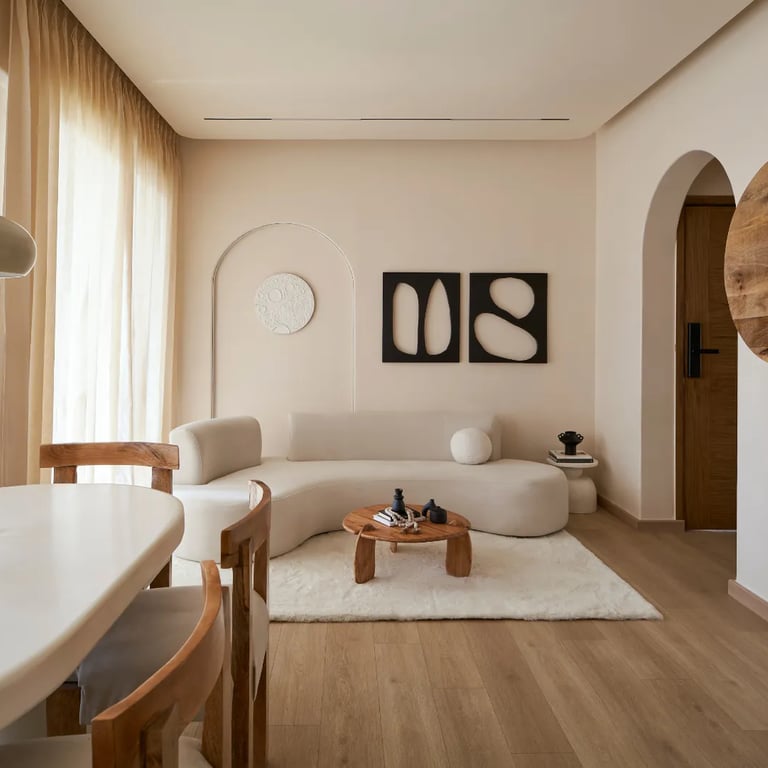
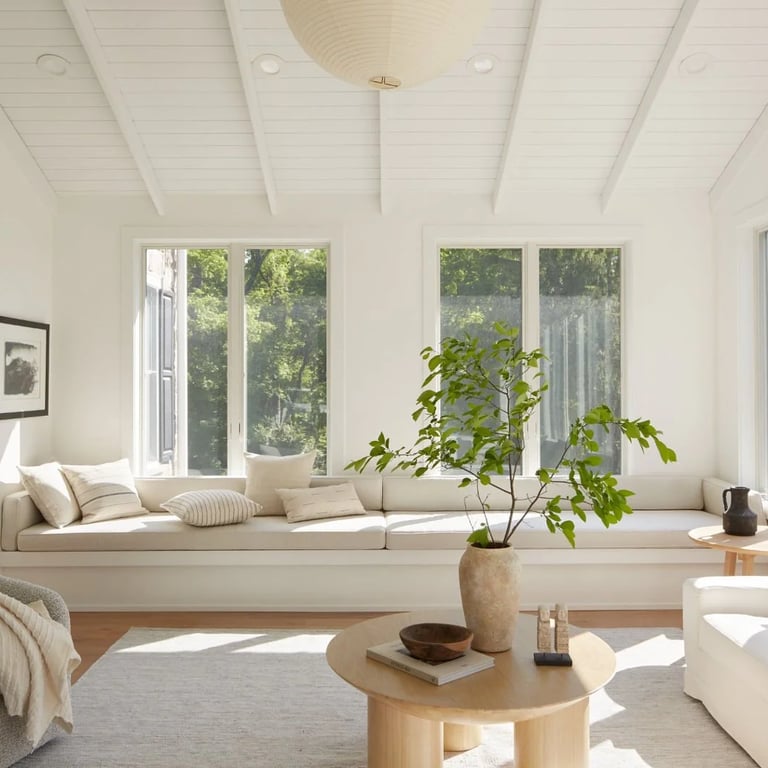
Anchor pieces are the large, significant items that establish the character of a room: the sofa, the bed, the dining table, the significant rug. These are the decisions that everything else should follow. When the anchors are right, the layers and accents that come after them have a context to respond to. When the anchors are wrong or missing, nothing that is added afterward can compensate.
Many people decorate in the opposite order, finding and buying accent pieces, cushions, throws, decorative objects, small tables, lamps that caught the eye at some point, and then finding that none of them quite cohere because there is no anchor for them to relate to. The room looks busy and unresolved because it is: the supporting cast arrived before the lead.
The correct order is anchor first, always. Identify and commit to the significant pieces in each room before buying anything that will surround them. The anchor does not need to be expensive. It needs to be decided. Everything after it follows from that decision.
Safavieh - Evoke Collection Ivory Beige Area Rug
Distressed vintage-style rug in warm ivory and beige. An anchor piece that works with almost any furniture and holds a seating arrangement together.
Stone & Beam - Caroleen Tufted Coffee Table
Clean-lined white tufted coffee table. A central anchor surface for a seating zone that reads as considered rather than assembled.
Belleze - Linen Sofa, Modern 3-Seater
Streamlined linen sofa in warm beige with clean arms and solid wood legs. A neutral anchor that layers well with any palette.
2. You have been adding rather than editing
Adding is the default response to a room that feels wrong. Something is missing, so something is purchased. The room feels flat, so a plant arrives. The shelves look empty, so objects fill them. The corner is bare, so a lamp goes in. Each addition feels like progress. The room gradually fills with things that were each individually chosen to solve a problem, and the problems persist because the issue was never a missing object.
Editing is the opposite process and the less intuitive one. Removing what is not working rather than adding what might. Taking things off the shelves rather than adding to them. Clearing a surface rather than styling it. Moving an object to a different room or out of the home entirely rather than finding a better position for it. Editing is what produces the settled, resolved quality that a finished room has, because a finished room contains only what was chosen, not everything that accumulated.
The test is simple. If a room still feels wrong after the last addition, the next step is not another addition. It is removal. Take one thing out of the room for a week and see whether the room improves. In most cases, it does.
3. You have been chasing trends mid-project
A home that was being decorated in one direction and then shifted mid-project because a different aesthetic became visible or appealing will always feel unresolved. The first direction is still visible in the earlier decisions. The new direction is visible in the later ones. The two coexist without coherence, and the room feels like two different visions occupying the same space.
Trends move faster than decorating timelines. What is dominant in home interiors at the beginning of a project may already feel dated by the time the project is halfway complete. A home decorated in response to trends rather than in response to the people who live in it will always be slightly out of date, and always in need of updating.
The alternative is to decide on a direction before buying anything significant and to hold that direction through the project regardless of what becomes fashionable. The direction should be personal rather than trend-led: specific materials, a specific quality of light, a specific feeling. These do not date because they were never current in the trend sense to begin with.
4. There is no defined point at which finished is declared
A home that never feels finished often has no agreed stopping point because finishing was never defined. What would done look like? What would the room contain that it does not contain now? What would be different about being in it? Without answers to these questions, the process of improving the home continues indefinitely, not because the home requires it but because the process has no agreed end.
Defining done in advance is an underrated act. It means deciding, before the next purchase, what the room will contain when it is complete. Which pieces are still needed and which are optional. At what point the room will be declared finished and left alone to be lived in. This is not a commitment to perfection. It is a commitment to a stopping point that makes the process finite rather than permanent.
A home that has a defined stopping point will arrive there. A home without one will not, regardless of how many decisions are made along the way.
5. Improving the home has become the habit
For some people, the process of working on the home has become a habit that is separate from the outcome it was supposed to produce. Shopping for the home, thinking about the home, planning improvements to the home, these activities have become part of the routine rather than steps toward a destination. The home never finishes because finishing it would end the activity that had become habitual.
This is worth naming directly because it is common and because it is rarely acknowledged. The pleasure of the process, the browsing, the finding, the imagining, the small improvements, can become a substitute for the pleasure of a finished, settled home. It produces a home that is always in progress rather than one that is actually lived in.
The shift from improving to living requires a decision to stop the process at the defined point and allow the home to be what it is, with its remaining imperfections, and to live in it rather than continue working on it. This is a harder shift than any decorating decision. And it produces a more settled home than any purchase.
How to Get Your Home to a Place That Feels Finished
Identify the anchors that are still missing
Walk through each room and identify the one or two significant pieces that are not yet in place. The sofa that was meant to be replaced. The rug that was always meant to be larger. The bed frame that is still the temporary one from years ago. These are the decisions that need to be made before anything else is added to those rooms. List them. Make them the next purchases, in order of the room that is most incomplete. Let everything else wait.
Edit before you add
Before the next purchase for any room, remove one thing from it. Take it to another room, put it in a cupboard, or remove it from the home entirely. Live with the room for a week with that thing gone. Notice whether the room improves without it. In most rooms that feel unresolved, the problem is not a missing object but an excess of objects none of which were edited out because each arrived with a reason. Removing is as decorating as adding. It is usually more effective.
Choose a direction and hold it
Write down, in a sentence or two, what the home is supposed to feel like when it is done. Not what it is supposed to look like but what it is supposed to feel like. Warm. Uncluttered. Personal. Calm. Use that description as the filter for every subsequent decision. Does this purchase move the home toward that feeling or away from it? Does this addition support the direction or complicate it? A written direction, referred to at every decision point, prevents the drift that comes from shopping without a brief.
Define what done looks like in each room
For each room, write a list of what it still needs. Not a wish list but a completion list: the specific pieces that are genuinely missing for the room to function and feel as intended. When those pieces are in place, the room is done. New things may be wanted after that point but the room is done and does not require them. This distinction between done and wanting more is the line between a home that feels finished and one that perpetually does not.
Allow the home to be lived in
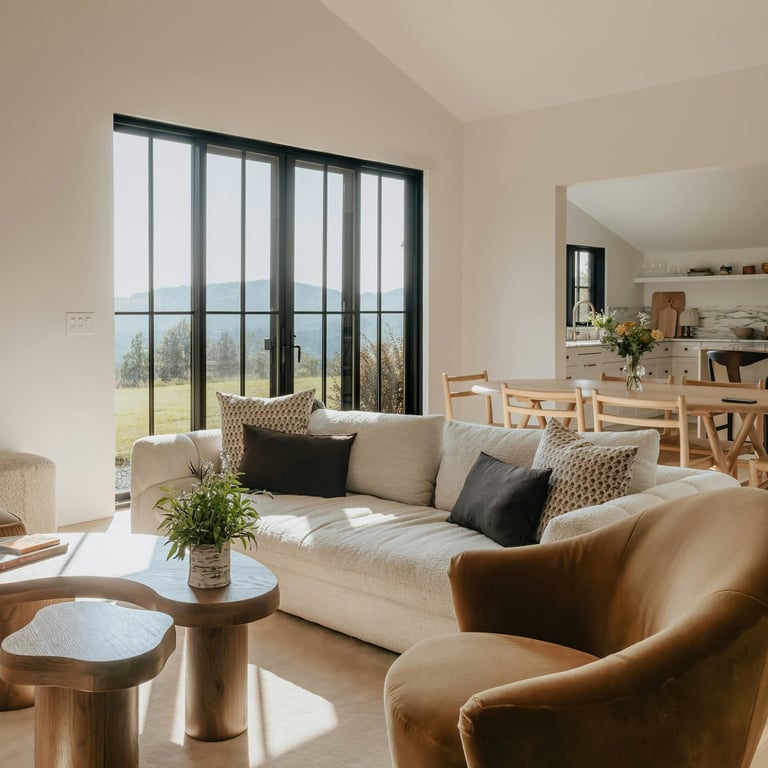
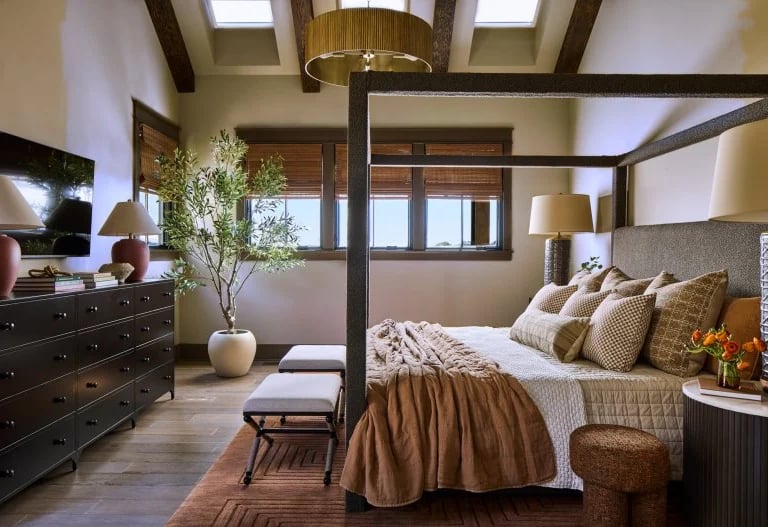
The most finished-feeling homes are not the ones that are perfectly styled. They are the ones that are fully inhabited: books out, objects used, rooms that show evidence of the people who live in them. Allowing the home to be lived in rather than perpetually prepared for a finished state is the last step in the process. Set down the process. Live in the home. That is what finished actually looks like.
Save This: The Correct Order of Home Decorating Decisions
Step 1: Decide the feeling. Write in one sentence what the home should feel like when done.
Step 2: Identify the anchors. List the significant missing pieces in each room before buying anything else.
Step 3: Settle the anchors. Make those purchases, in order of priority, before adding layers or accents.
Step 4: Edit. For every addition to a room, remove one thing and live with the room for a week.
Step 5: Define done. Write the completion list for each room. When those pieces are in place, the room is finished.
Step 6: Stop. Live in the home. Allow it to be inhabited rather than perpetually improved.
A home that never feels finished does not need more things. It needs this sequence, applied with patience and a willingness to stop when done is done.
Final Thought
A finished home is not a perfect home. It is a home where the decisions were made in the right order, where the process was allowed to end, and where the result, with its remaining imperfections and ongoing life, was accepted as done.
The unfinished feeling is not a sign that more is needed. It is almost always a sign that the process needs to change rather than the home. Anchor first. Edit more than you add. Decide what done looks like. Declare it when it arrives. Live in what you have built.
That is all a finished home has ever been. Not the result of every right decision made in sequence, but the result of stopping when enough of them had been made and choosing to be in the home rather than continuing to work on it.
This is the final post in the room-by-room series. Thank you for reading along. The full series is available at adairlane.com.