Why Your Bedroom Doesn't Feel Restful (And What to Change Tonight)
4/19/20269 min read
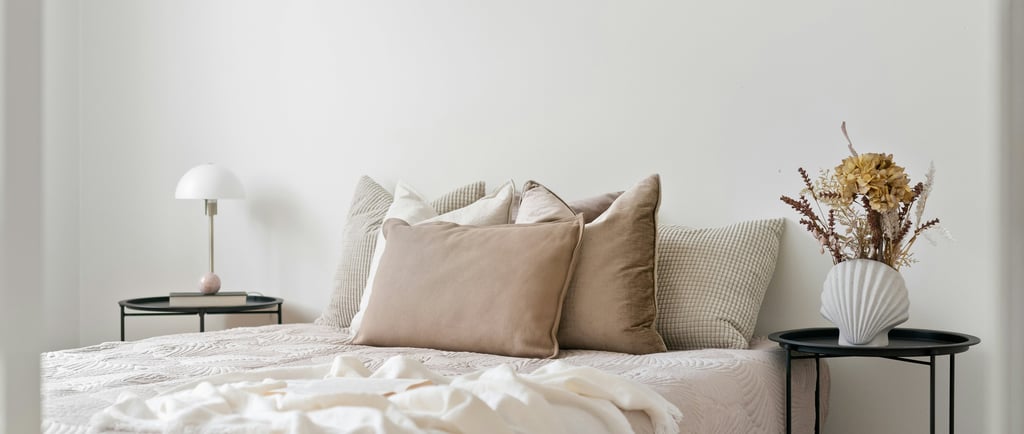
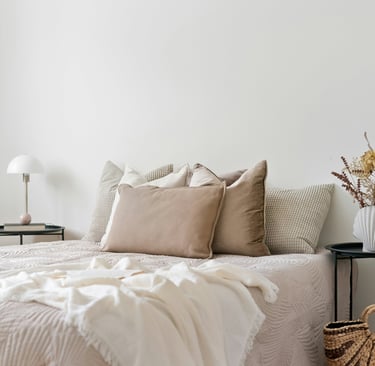
You get into bed and your mind does not switch off.
Not because of your phone, not because of your schedule, and not because of anything that happened today. The room itself is the problem. Something about it is keeping you alert when you should be winding down, and no amount of lavender spray or white noise seems to fully fix it.
A bedroom that does not feel restful is almost always sending the wrong signals. Not loudly, not obviously, but consistently. Every element in a room communicates something to the person in it, and when those signals are mixed, your nervous system responds with the same low-level alertness you feel when something is slightly off but you cannot name what it is.
The good news is that this is not a sleep problem. It is a room problem. And room problems are fixable.
This is the sixth post in the room-by-room series. Last week we looked at why your living room never feels calm and how to fix it. This week the bedroom: the room that should be the clearest in your home in terms of purpose, and the one that most often fails to communicate that purpose to the people sleeping in it.
What a Restful Bedroom Actually Does
A restful bedroom communicates one thing clearly and consistently: this room is for rest.
Every element in it should support that signal. The light should say wind down. The surfaces should say there is nothing here that needs your attention. The materials should invite touch rather than resist it. The colors should calm rather than activate. And the layout should make the bed the undisputed centre of the room rather than one object among many.
When any of these elements sends a different signal, the room becomes visually and psychologically contradictory. You are lying in a space that is supposed to help you rest, but parts of it are telling your brain to stay awake, stay alert, or process something unresolved.
This is why a beautifully styled bedroom can still feel hard to sleep in, and why a simple, modest room can feel deeply restful. It has almost nothing to do with how the room looks in a photograph and almost everything to do with what it communicates when you are lying in it at the end of the day.
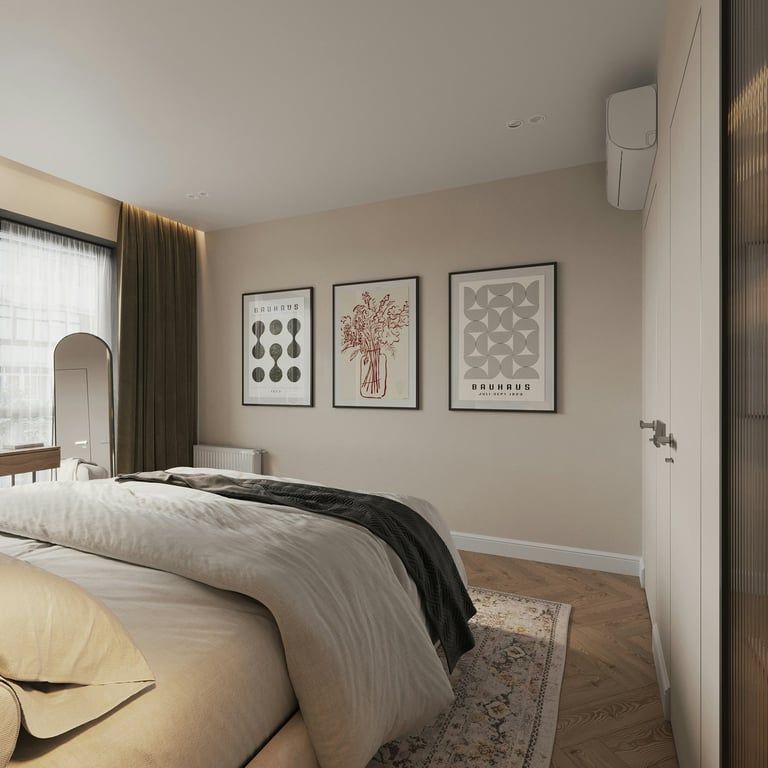

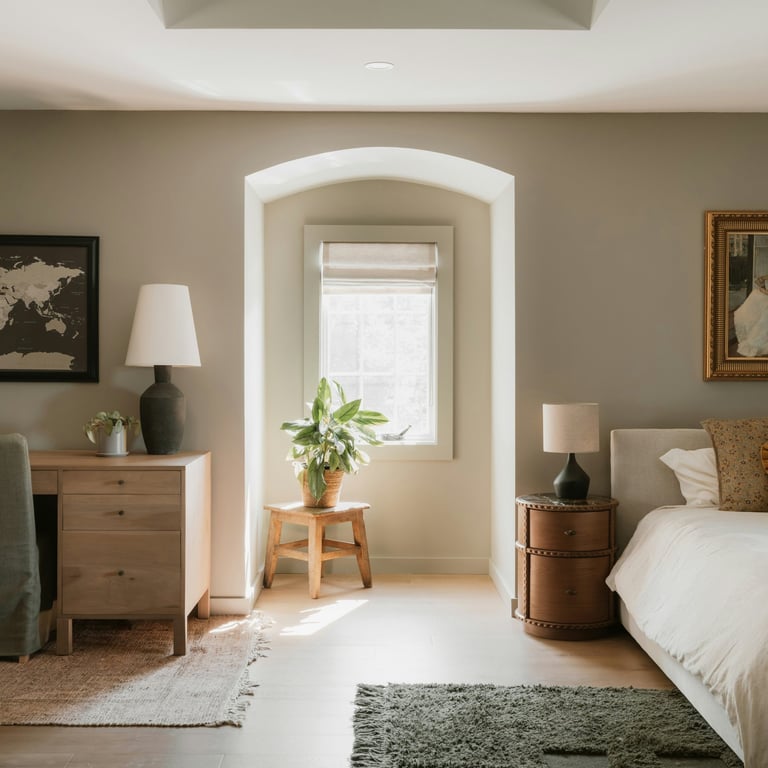

The Real Reasons Your Bedroom Does Not Feel Restful
1. Visual clutter on surfaces
The bedroom brain is different from the daytime brain. When you are winding down, your mind becomes more sensitive to unresolved visual information. Items left on surfaces, a chair with clothes draped over it, a bedside table crowded with objects. Each of these registers as something unfinished, something that needs attention, something you will have to deal with.
You may not consciously notice any of these things when you walk in. But your brain does. And it processes them quietly in the background, maintaining a level of alertness that makes genuine rest harder to reach.
The bedroom surface rule is simple: maximum three intentional objects per surface. Everything else is either stored or removed. The less your eyes have to process when you are lying down, the more easily your mind lets go.
2. The bed is not the clear anchor
In a bedroom, the bed should dominate. Not aggressively, but clearly. It should be the first thing you see when you enter, the visual centre of the room, and the piece that everything else is arranged to support.
When the bed is pushed into a corner, not centred on a wall, missing a headboard, or visually competing with other large pieces of furniture, the room loses its identity. It stops reading as a bedroom and starts reading as a room that contains a bed. That distinction matters more than it sounds.
A bed that is properly anchored, centered on its wall with a headboard that gives it visual weight and art or a light hung at the right height above it creates a room that has a clear purpose before you have even changed how anything else is arranged. This single change resolves more bedroom problems than almost anything else.
Amazon - Neutral Upholstered Headboards
Linen and boucle finishes in warm neutrals, wide price range, fast shipping.Wayfair - Upholstered Headboards
Large selection at every price point, good filtering by size and color.West Elm - Headboards
Design-led, calm aesthetic.AllModern - Headboards
Mid-range, well-curated, reliable quality.Amazon - Wall-Mounted Headboard Panels
Good option for renters who want something temporary and removable.
3. Colors or patterns that activate rather than calm
Color has a measurable effect on the nervous system, and bedrooms are the room where that effect matters most. High-contrast colors, bright saturated tones, and busy patterns keep the visual cortex engaged when it should be quieting down.
A restful bedroom uses colors that sit in the calm, muted, or warm family. Soft whites, warm creams, dusty pinks, muted sage, gentle taupe. These are not boring colors. They are colors that allow the eye to rest rather than giving it something to process.
The same applies to pattern. A large geometric print on the bedding, a high-contrast wallpaper, or a bold patterned rug introduces visual complexity that the brain continues to process even when you are trying not to. Simplify the pattern before you simplify anything else, because it is often the single loudest element in a bedroom even when it does not look like it.
4. The lighting is too bright and too white
Overhead lighting in a bedroom is almost always wrong. Not slightly wrong, not worth adjusting. Wrong in a way that undermines everything else you do to make the room feel restful.
Bright, cool-toned light suppresses melatonin and signals to the brain that it is time to be awake. This is not a wellness opinion. It is how the visual system works. A bedroom lit from a central overhead source at full brightness an hour before sleep is actively working against rest regardless of how calm everything else in the room is.
Bedside lamps at the right height, with warm bulbs at 2700K or below, create the shift from alertness to rest that overhead lighting never can. The light should come from beside you and slightly below eye level when you are sitting up in bed, not from above you. That position mimics the low, warm light of late afternoon and tells the brain that the day is winding down.
Amazon - Ceramic Bedside Table Lamps
Ceramic base with linen shade is the strongest aesthetic match for a calm bedroom.West Elm - Bedside Table Lamps
Premium, design-forward options that align with your calm home perfectly.Amazon - Warm White LED Bulbs
Essential companion recommendation alongside any lamp. The bulb matters as much as the lamp.Wayfair - Bedside Table Lamps
Good mid-range selection, easy to filter by style and finish.
5. Non-bedroom items are blurring the room's purpose
A desk in the corner of the bedroom is one of the most common restfulness problems in modern homes, particularly for people who work from home. Even when the screen is off and the chair is pushed in, the desk communicates work. It is a visual reminder of unfinished tasks, and that reminder persists at the edge of your awareness when you are trying to sleep.
The same applies to exercise equipment, piles of unsorted laundry, overflowing bookshelves, and storage that belongs elsewhere. Every non-bedroom item in the room introduces a signal that competes with rest. The bedroom's job is to communicate one thing. Every object that communicates something different makes that job harder.
If removing these items entirely is not possible, the next best option is to make them visually disappear. A folding screen around the desk. A curtain in front of the storage. A basket with a lid for the laundry. If the eye cannot find them easily, the brain is less likely to register them.
6. There are no soft layers
Hard surfaces, uncovered floors, bare walls, and minimal textiles create a room that looks clean but feels clinical. Rest requires softness, not just physically but visually. Soft materials absorb light rather than reflecting it, which reduces the visual activity in a room and creates a quiet warmth that hard surfaces cannot replicate.
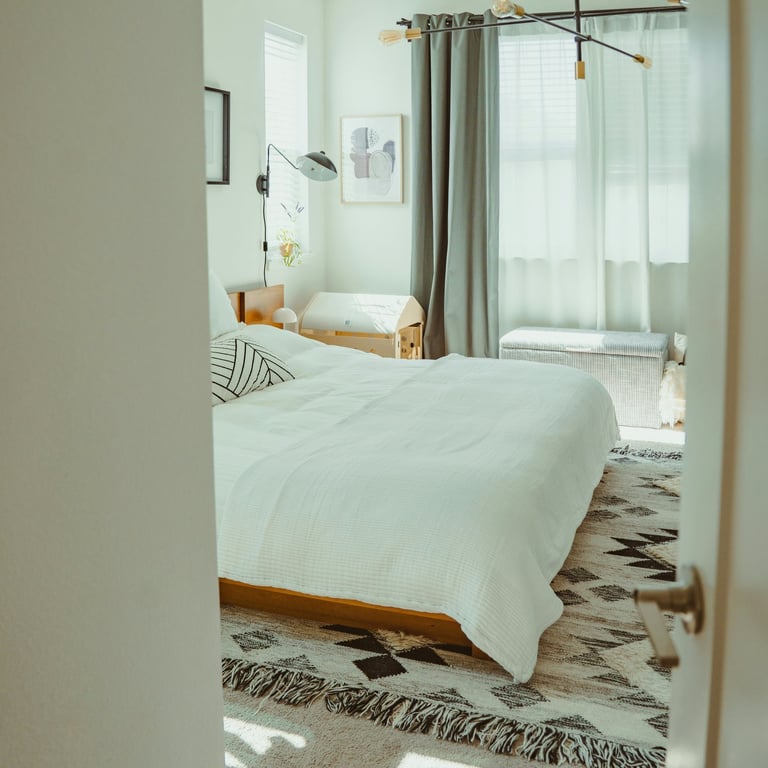
A restful bedroom has soft materials dominating what you see from the bed. Linen or cotton bedding in a calm tone. A wool or cotton throw folded at the foot. A rug underfoot so the first sensation when you get out of bed is warmth rather than cold floor. Curtains that reach the floor and soften the windows. These are not luxury additions. They are functional elements that directly affect how the room feels to rest in.
Linen Bedding:
Amazon - Neutral Linen Bedding Sets
Wide selection, well reviewed, accessible price point.West Elm - Linen Bedding
Premium quality, calm colorways.Parachute Home - Linen Sheets
Editor-loved, high quality, consistently recommended across home editorial.
Wool Throws:
Wayfair - Wool Throws and Blankets
Good selection including Pendleton and natural wool options in neutral tones.Etsy - Wool Throws
Handmade merino options, personal feel, ships worldwide.
Area Rugs for Bedroom:
West Elm - Natural Fiber Rugs
Jute and wool blends in warm neutrals, ethically handcrafted, perfect for bedrooms.Amazon - Soft Area Rugs for Bedroom
Affordable, wide selection, good for readers who want warmth underfoot at a lower price point.Rugs USA - Bedroom Rugs
Frequently on sale, large selection of warm neutral tones, good value.

The Restful Bedroom Framework
Work through these in order. The first two will make the most immediate difference.
Clear the surfaces first
Before changing anything else, clear every surface in the bedroom down to a maximum of three intentional objects. Bedside table, dresser, windowsill, chair. If it does not need to be there and it is not beautiful, it goes away. Do this before making any other change and notice how much calmer the room already feels.
Anchor the bed
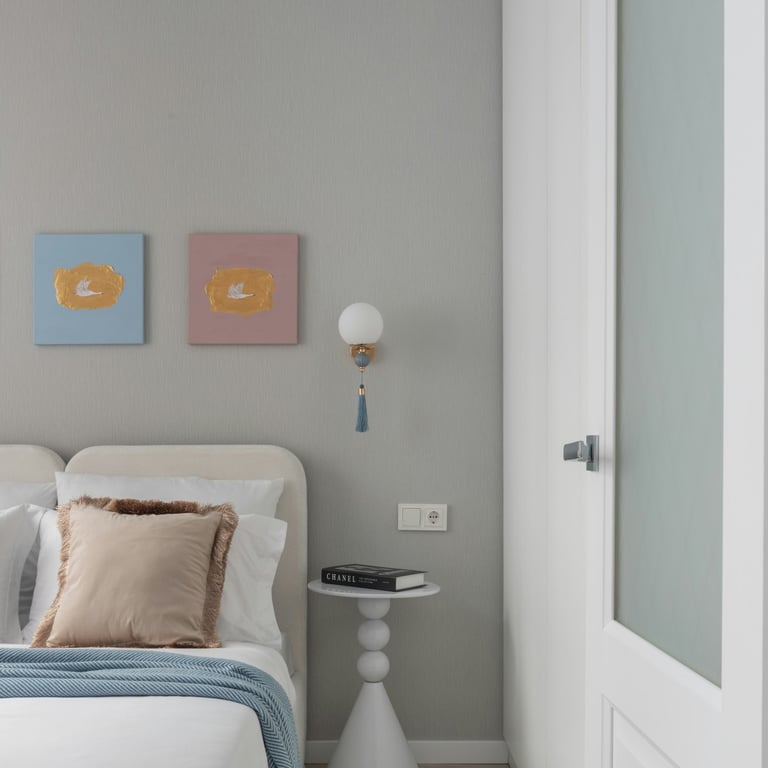
If the bed is not centered on the main wall, move it. If it does not have a headboard, add one. Even a simple upholstered panel makes an immediate difference to how much visual weight the bed carries. If there is art or a light above the bed, check that it is at the right height: the bottom of the art or the centre of a sconce should sit roughly 20 to 25 centimetres above the top of the headboard.
Change the lighting tonight
This is the one change you can make tonight that will have an effect tonight. Turn off the overhead light before bed and use only bedside lamps from now on. If you do not have bedside lamps, a warm-toned lamp on a dresser or floor lamp in the corner is better than the overhead. Replace any cool-white bulbs with warm white at 2700K. The difference in how quickly you unwind will be noticeable within the first few evenings.
Simplify the palette
Look at the bedroom from the doorway and count how many distinct colors or tones are visible. If the number is higher than three, identify the ones that feel most activating or most out of place and remove or replace them. A bedroom palette of two to three calm tones, repeated across bedding, textiles, and walls, creates a visual quiet that makes the room easier to rest in.
Add softness where the room is hard
Identify the surfaces and areas that feel hardest visually: bare floor, uncovered windows, flat walls, minimal bedding. Address them in order of what you see most from the bed. A rug if there is bare floor. Curtains that reach the floor if the windows are bare. A throw at the foot of the bed if the bedding feels flat. These additions do not need to be expensive. They need to be soft, warm-toned, and present.
Amazon - Linen Curtains Floor Length
Floor-length linen curtains in warm neutrals make an immediate visual difference and are one of the most searched home purchases.West Elm - Curtains and Drapes
Premium options in natural fibers, calm colorways.
What to Change Tonight
You do not need to wait for a weekend or a budget. These three things can be done in the next hour and will have a noticeable effect by the time you go to sleep.
Clear every surface down to three objects or fewer
Turn off the overhead light and use only lamps from this point forward
Remove one non-bedroom item that is blurring the room's purpose
Start there. The rest of the framework can follow over the coming days and weeks. But these three changes, done tonight, will tell you immediately how much the room is capable of feeling different.
Save This: Five Rules for a Restful Bedroom
Maximum three intentional objects per surface. Everything else is stored or removed
The bed is the undisputed anchor, centered, with visual weight and proper height art above it
Warm light only from bedside lamps at 2700K, with no overhead lighting in the hour before sleep
A palette of two to three calm tones, nothing that activates or demands attention
Soft materials dominating what is visible from the bed: linen, cotton, wool, nothing hard or cold
Apply these before buying anything new. Most bedroom restfulness problems are solved by removing and simplifying rather than adding.
Final Thought
Your bedroom should be the easiest room in your home to understand. One purpose, clearly communicated by everything in it.
When the surfaces are clear, the bed is the obvious anchor, the light is warm and low, the palette is calm, and soft materials are present, the room starts to do its job without any effort from you. You walk in and your body begins to unwind before you have even made a conscious decision to rest.
That is not a luxury. That is what a bedroom is supposed to do. And it is available in the room you already have.
Next week we move to the kitchen, the one room where visual calm feels almost impossible to achieve, and why that assumption is wrong.
Stay Elevated,
The Adair Lane.