Why Your Living Room Never Feels Calm (And How to Fix It)
4/12/20269 min read
The living room is the room you spend the most time in.
It is the first place you go when you get home, the room you sit in at the end of the day, the space where you are supposed to rest. And yet for many people it is the room that feels most persistently off. Not wrong in any single obvious way. Just never quite calm. Never quite the place you imagined it would be when you moved in or when you first arranged it.
You have rearranged the furniture. You have added things and removed things. You have tried different configurations and different combinations. And still the room does not quite settle.
The reason is almost never what people think it is. It is not that the room needs more furniture, a bigger rug, or a better sofa. It is that the living room is being asked to do too many things at once without a clear sense of what it is primarily for. And that conflict is usually what creates the unsettled feeling that no amount of styling seems to fix.
This is the fifth post in an ongoing series looking at why specific rooms feel the way they do and what to do about it. The first four posts covered why your home feels messy, busy, almost right, and not cozy enough.
This week we are applying that thinking to the room that matters most: the living room.
Why the Living Room Is the Hardest Room to Get Right
Every other room in your home has a clear primary purpose. The bedroom is for sleep. The kitchen is for cooking. The bathroom is functional. But the living room is asked to be everything at once.
It needs to be a space for relaxing alone, a gathering place for conversation, a room that looks considered and styled, a functional space that holds books and remotes and the things of daily life, and often a space for children or working from home as well. That is an enormous amount to ask of one room.
Most living rooms fail not because they are poorly designed but because they try to serve all of those functions equally, which means the room has no clear identity. It does not know what it is for, and that ambiguity is felt by everyone who spends time in it, even if they cannot name it.
A calm living room makes one function primary and lets everything else support that function rather than compete with it. Deciding what your living room is mainly for is the first and most important step toward making it feel settled.
The Real Reasons Your Living Room Does Not Feel Calm
1. The furniture is arranged for the room, not for the people in it
The most common furniture arrangement mistake is placing every piece against a wall. It feels logical, it maximises the floor space in the middle and makes the room feel larger. But it creates a room that feels like a waiting area rather than a living space.
When furniture is pushed against walls, people sit far apart from each other and face the centre of the room rather than each other. There is no sense of enclosure or intimacy, and the room feels like it is performing rather than being used.
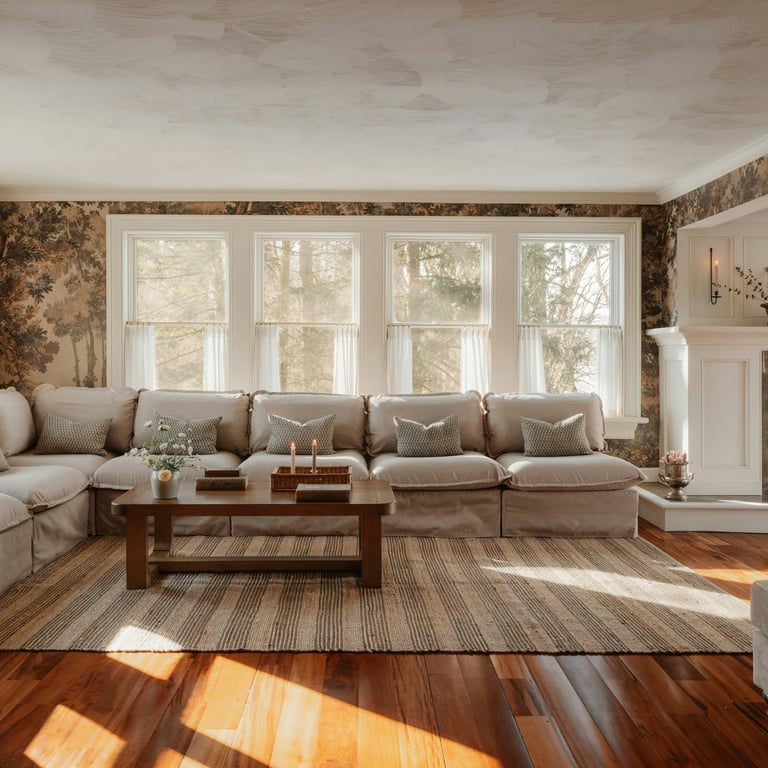
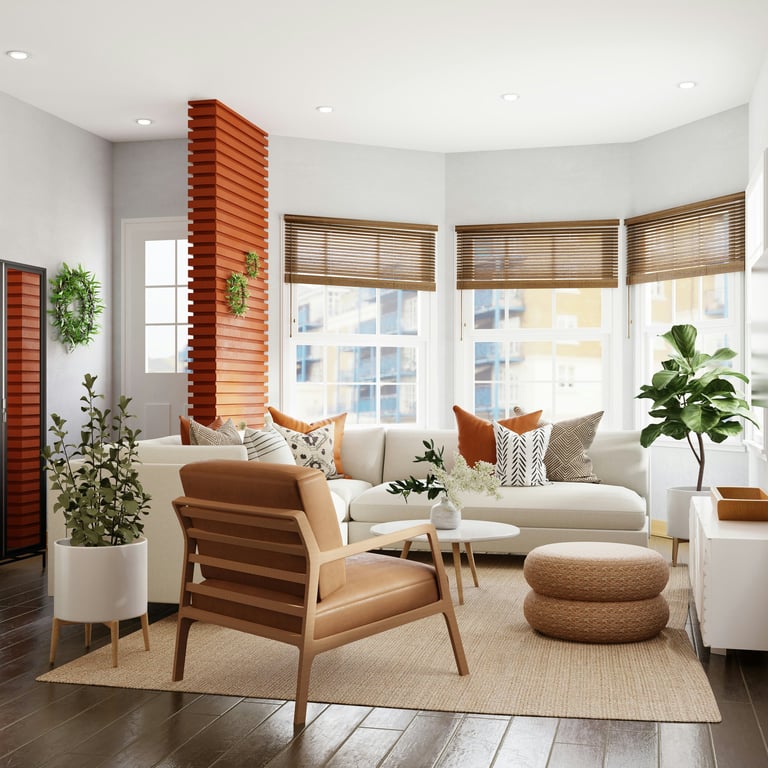
Pulling furniture away from the walls and inward toward each other creates conversation zones, a sense of enclosure, and a room that feels like it was arranged for people rather than for appearances. This single change transforms most living rooms more than any other.
2. There is no clear focal point
A focal point is the place a room organizes itself around, the thing your eye goes to first when you walk in. In a living room it might be a fireplace, a large window, a statement sofa, or a significant piece of art. When a focal point exists and is clear, the rest of the room feels settled because everything is in relationship to that one thing.
When there is no focal point, the eye moves continuously around the room looking for somewhere to land. That movement is tiring, even when you are not consciously aware of it. And it creates a room that feels restless no matter how carefully everything has been arranged.
If your living room lacks a focal point, identify what the most significant element is, or should be, and arrange everything else to face or support it. The television is a focal point by default in most rooms, but it does not have to be the only one.
3. Too many visual elements are competing at the same height
Visual calm in a room comes partly from variety in height. When every element in a room sits at roughly the same level, sofas, coffee tables, side tables, shelving, art, the room feels flat and simultaneously busy, because there is no rhythm to guide the eye up or down.
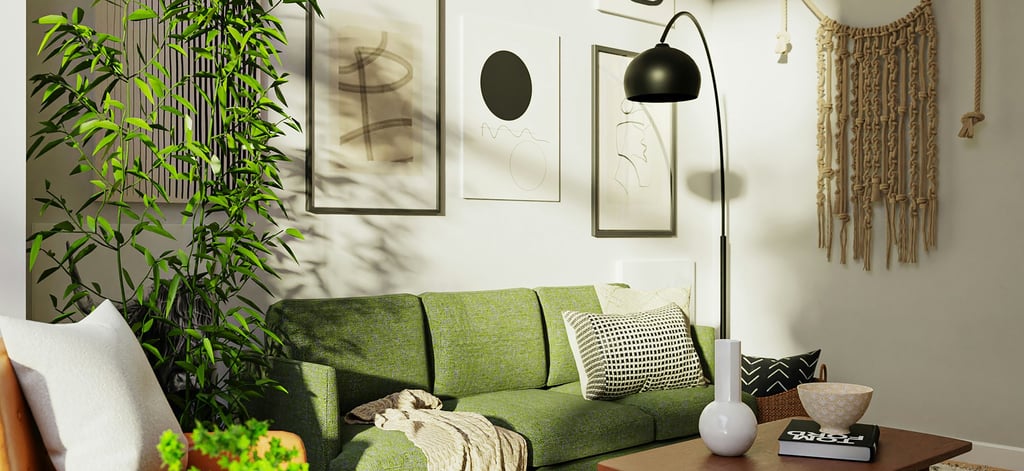
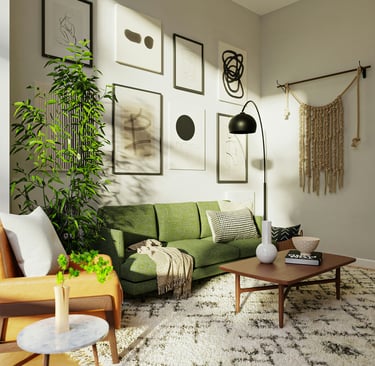
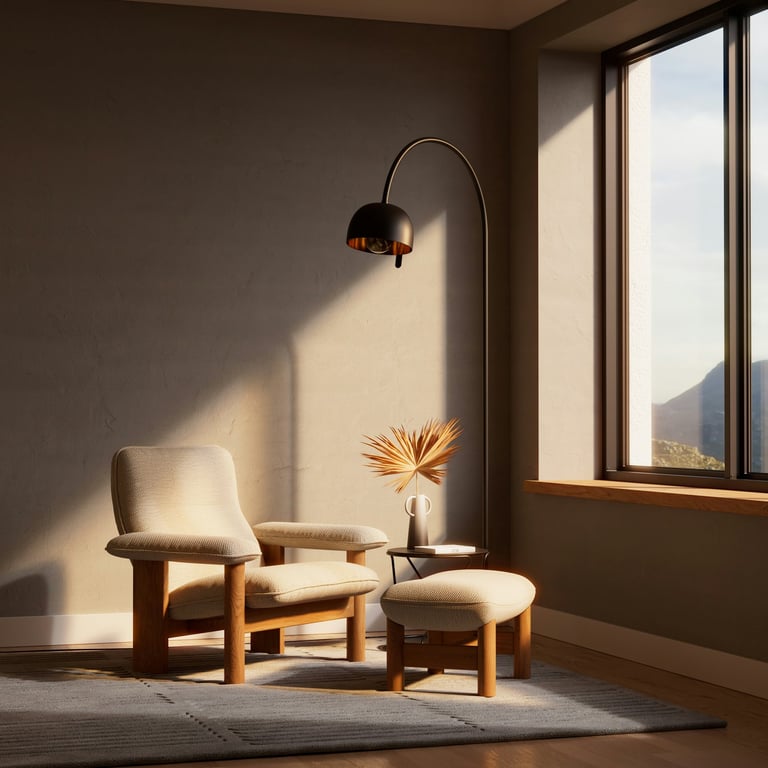
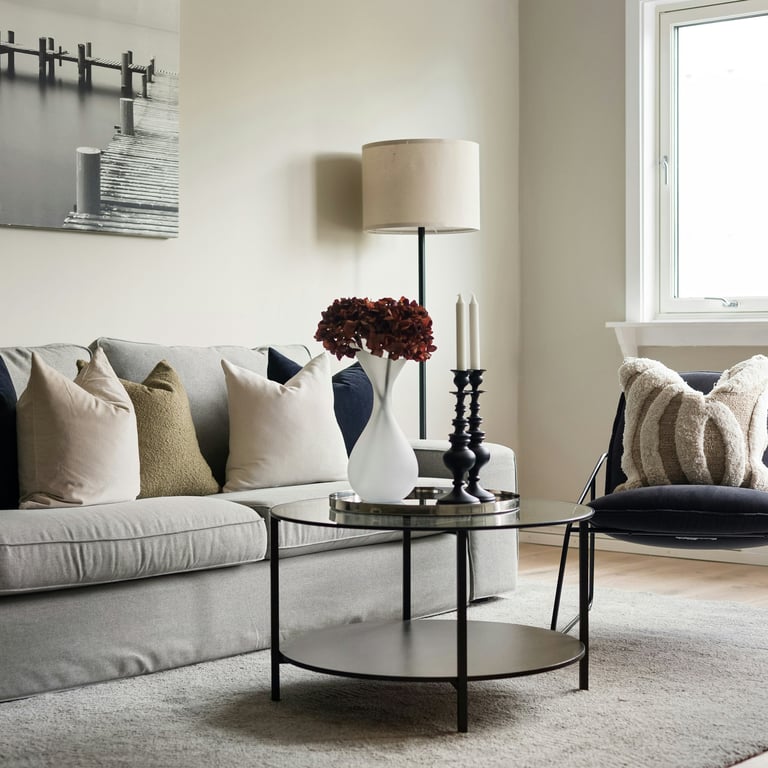
A calm living room has deliberate variation in height. A tall floor lamp in one corner. Low seating that creates a settled, grounded feeling. A shelf or piece of art that draws the eye upward. Objects on the coffee table at different heights. This variation creates the visual rhythm that makes a room feel considered rather than assembled.
Amazon - Tripod Floor Lamps
Tripod style with a fabric shade reads as warm and intentional, fits most living room.West Elm - Floor Lamps
Design-led options that align with your home's aesthetic.Wayfair - Floor Lamps
Huge selection at every price point.AllModern - Floor Lamps
Mid-range, well-curated, reliable quality.Amazon - Arc Floor Lamps
Arc lamps are particularly effective for pulling over a reading chair or sofa and create strong height variation.
4. The lighting is coming from one source
A living room lit entirely from overhead is a living room that will never feel fully calm. Overhead lighting flattens a room, removes shadows, and creates a brightness that feels functional rather than inviting. It is the lighting equivalent of turning everything up to full volume.
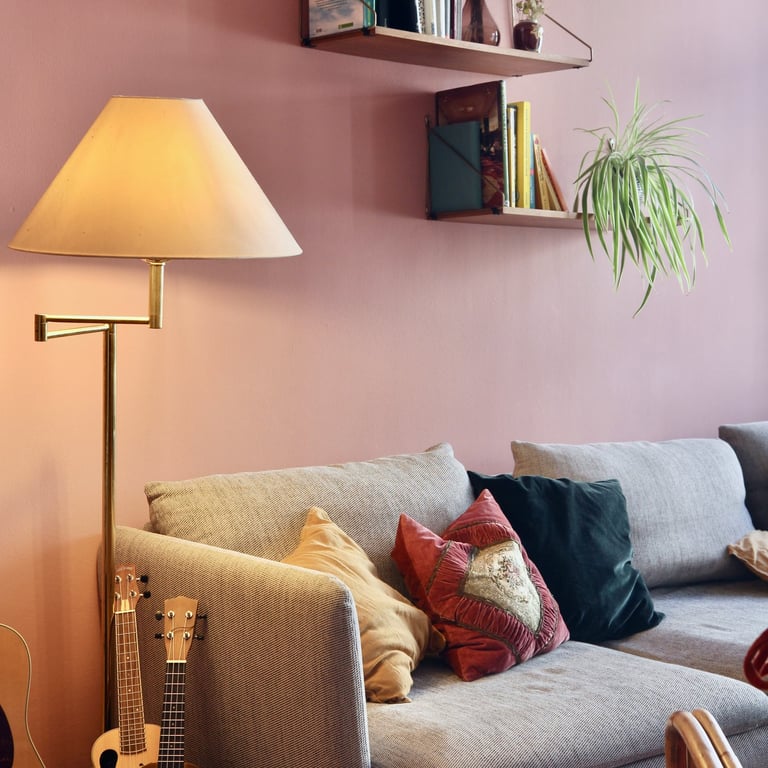
A calm living room has layered lighting from multiple sources at different heights. A floor lamp in one corner. A table lamp on a side table. A smaller light on a shelf or console. These pools of warm light create depth, shadow, and a sense of warmth that overhead lighting cannot replicate.
The simplest test: turn off your overhead light and turn on every lamp in the room. If the room immediately feels calmer and warmer, lighting is one of your primary problems and investing in one or two additional lamp sources will do more than almost anything else you could change.
Amazon - Ceramic Table Lamps
Ceramic base with linen shade options that matches your home.West Elm - Table Lamps
Premium options that match your calm home perfectly.Amazon - Warm White LED Bulbs 2700K
The bulb matters as much as the lamp - this is essential to create warm feeling.Wayfair - Table Lamps
Good mid-range selectionsAllModern - Table Lamps
Clean, design-forward options at accessible prices.
5. The room has no defined zones
A living room that tries to be everything everywhere ends up feeling like nothing in particular. When the reading area bleeds into the working area which bleeds into the television area, the room has no sense of intention and every corner feels slightly unresolved.
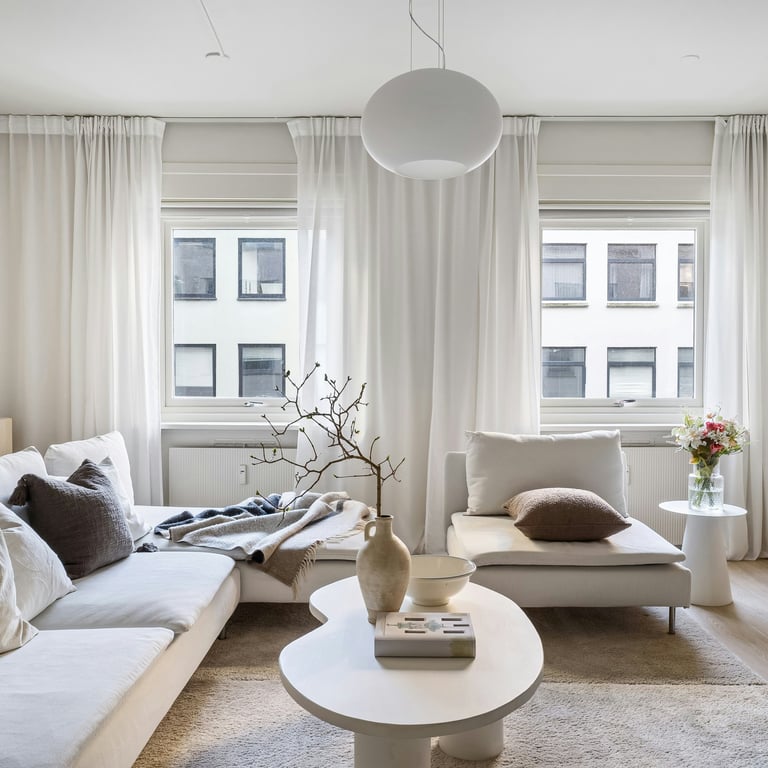
Defining zones does not require walls or partitions. A rug anchors a seating zone. A floor lamp and a chair create a reading zone. A console table behind the sofa creates a subtle boundary. These simple definitions give the room a sense of purpose and make each area feel more intentional and more usable.
West Elm - All Area Rugs
Natural fiber and wool options in warm neutrals.Revival Rugs - Living Room Rugs
Handwoven, artisan rugs with warm earthy tones.Rugs USA - Area Rugs
Affordable, frequently on sale, good for budget options.Amazon - Large Neutral Area Rugs
Fast shipping, wide selection, good entry-level recommendations.AllModern - Area Rugs
Mid-range, reliable quality, calm colorways.
The Calm Living Room Framework
Before rearranging or buying anything, work through these five decisions in order. Each one builds on the last.
Decide what the room is primarily for
Relaxing alone, gathering with others, or both equally? The answer shapes every decision that follows. A room primarily for relaxing should prioritize comfort, soft lighting, and calm surfaces. A room primarily for gathering should prioritize seating arranged for conversation and a clear, uncluttered centre. A room for both needs clear zones that serve each purpose without interfering with the other.
Identify and commit to one focal point
Look at the room and decide what the anchor is, or what it should be. If you have a fireplace, it is almost certainly the focal point whether you treat it that way or not. If you have a large window with a view, consider whether the room should orient toward that. If neither exists, a large sofa or a significant piece of art can serve the same function. Once the focal point is decided, arrange everything else to face or support it.
Pull the furniture inward
Move every piece of seating away from the walls by at least thirty centimetres. If the room feels smaller, that is usually a sign it is working. Enclosure is part of what makes a space feel calm and gathered rather than exposed. The floor space you gain by pushing furniture against walls is not worth the feeling you lose.
Layer your lighting
Add at least one lamp source for every overhead light currently doing all the work. A floor lamp in the corner opposite the sofa. A table lamp on the side table. A smaller warm light on a shelf or console. Once those are in place, try spending an evening with only the lamps on and notice how the room changes.
Choose one material and repeat it
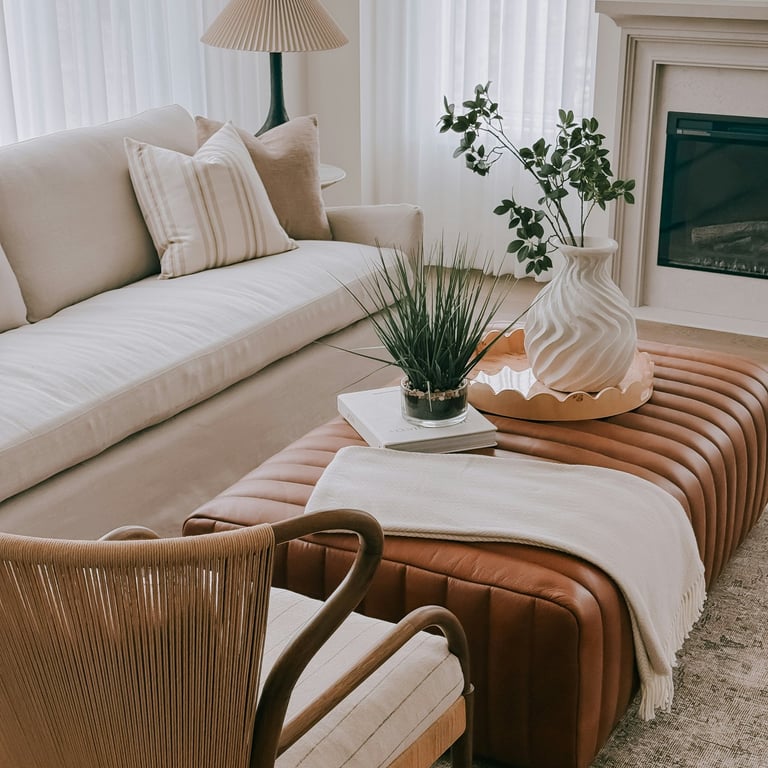
Pick one material, warm wood, natural linen, matte ceramic, or woven rattan, and make sure it appears at least three times in the room. That repetition creates the visual thread that makes a room feel curated rather than assembled. It costs nothing to apply to what you already have, and it resolves more of the almost-right feeling than most people expect.
Amazon - Linen Cushion Covers
Most accessible entry point, well reviewed and also ships fast.Linen Tales - Cushion Covers
Premium pure linen.Amazon - Neutral Matte Ceramic Vases
Sets of two or three in matte finishes, affordable.West Elm - Decorative Accessories
Covers ceramics, wood objects, trays and accent pieces in one place.Amazon - Natural Wood Home Decor
Trays, bowls, candle holders - wide selection at accessible prices, easy first purchase.
How to Fix It This Weekend
You do not need to buy anything to start. Work through these steps in a single afternoon and see what changes before you spend anything.
Step 1: Pull the furniture away from the walls
Start here. Move every piece of seating inward. If the arrangement feels wrong, experiment, but do not push everything back against the walls. Give the new arrangement at least a day before deciding it is not working.
Step 2: Identify and clear around your focal point
Whatever the anchor of your room is, clear everything that is competing with it for attention. Remove objects from its immediate surroundings, rehang art that sits too low or too high, and make sure the focal point is the first thing the eye finds when entering the room.
Step 3: Turn off the overhead light
Do this now and see what else the room needs. If it feels too dark, that tells you where to add lamps. If it immediately feels calmer and warmer, you have confirmed that lighting is one of the room's primary problems.
Step 4: Remove the two or three loudest visual elements
Walk to the doorway and look at the room. Identify the two or three things that your eye goes to that you do not want it to go to. Remove them, at least temporarily. The room will almost certainly feel quieter without them, which tells you they were creating visual noise rather than contributing to the space.
Step 5: Find your material thread
Look at what material or tone already appears more than once in the room. That is your thread. If you cannot find one, choose the material that appears most naturally in what you already have and see where else it could be introduced without adding anything new
Save This: Five Rules for a Calm Living Room
Decide what the room is primarily for and design around that one purpose
Identify one focal point and arrange everything else in relation to it
Pull furniture away from the walls to create enclosure and conversation
Layer lighting from at least three sources at different heights
Repeat one material at least three times to create visual rhythm
Work through these before buying anything. Most living room problems are solved by rearranging and removing rather than adding.
Final Thought
A living room that feels calm is not a living room with less in it. It is a living room that knows what it is for.
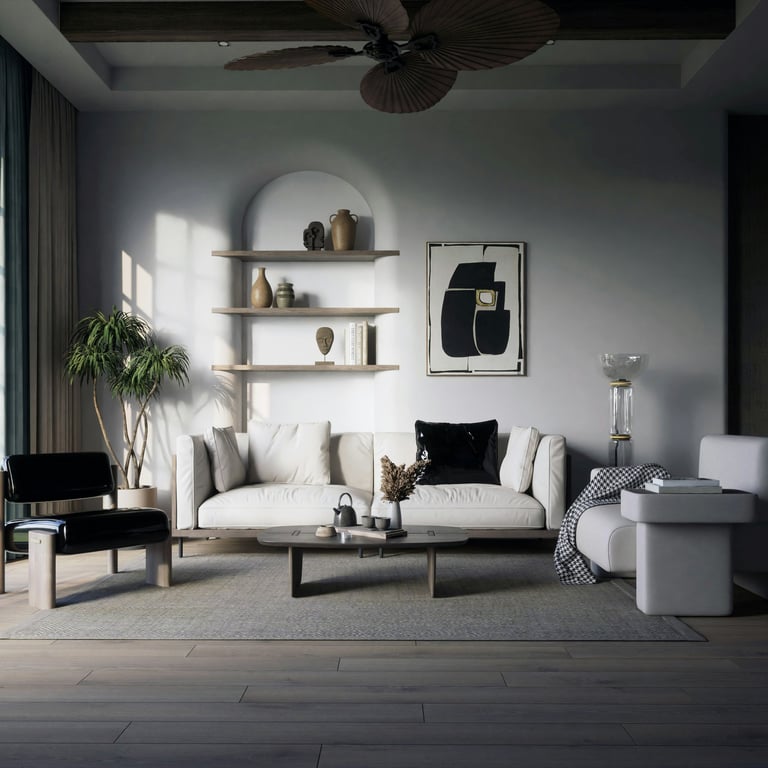
When the room has a clear purpose, a clear focal point, furniture arranged for the people in it rather than the space around them, and lighting that creates warmth rather than brightness, it starts to feel like the room you always imagined it could be.
That shift does not require a renovation or a significant budget. It requires intention, and intention costs nothing.
Next week we look at the bedroom: why it so often fails to feel restful even when everything in it has been chosen for comfort, and what to change tonight to start fixing it.
Stay elevated,
The Adair Lane.