Why Your Kitchen Feels Chaotic Even When It’s Clean
4/26/20268 min read
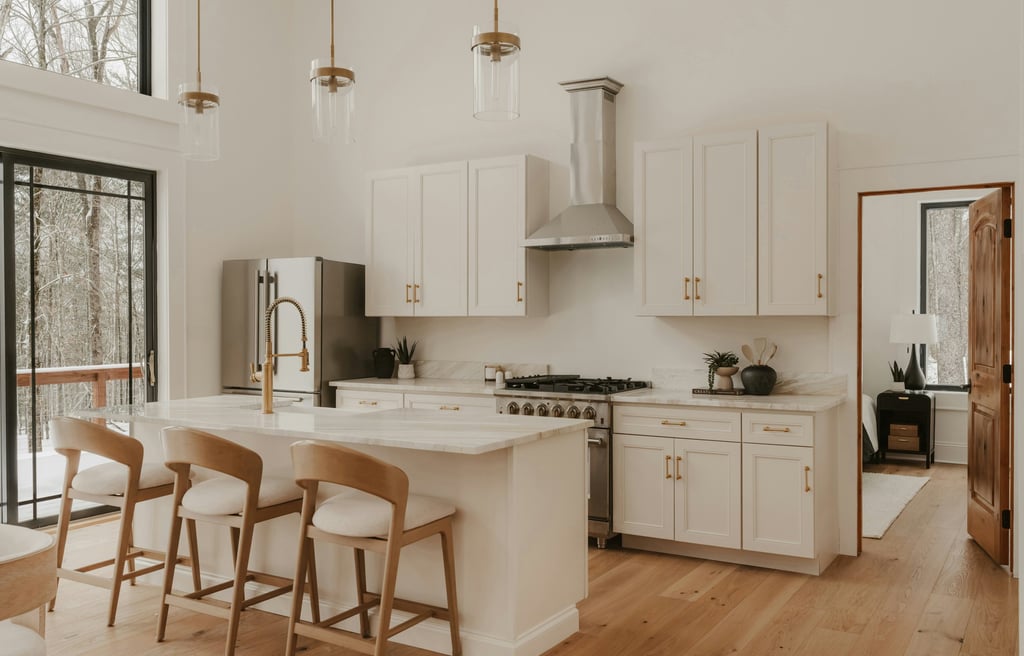
The kitchen is the one room most people accept defeat in.
Not the living room, where there is at least a clear vision of how it is supposed to feel. Not the bedroom, where the purpose is obvious. The kitchen. The room where visual noise feels structural, where chaos feels built into the function of the space, where people say things like “it’s a kitchen, what do you expect.”
You have cleaned it. You have organised it. You have put things away and wiped down the surfaces and yet it still feels like a lot. Like the room is working against you rather than for you. Like calm is something that happens in other people’s kitchens.
It does not have to feel this way. And the reason it does is almost never the kitchen itself.
This is the seventh post in the room-by-room series. We started with why your home feels messy even when it is clean, moved through visual noise, the almost-right feeling, coziness, living room calm, and bedroom restfulness. This week: the kitchen, and why visual chaos there is not inevitable.
What Kitchen Calm Actually Means
A calm kitchen is not a minimal kitchen. It is not an empty kitchen, a white kitchen, or a kitchen that looks like it belongs to someone who never cooks.
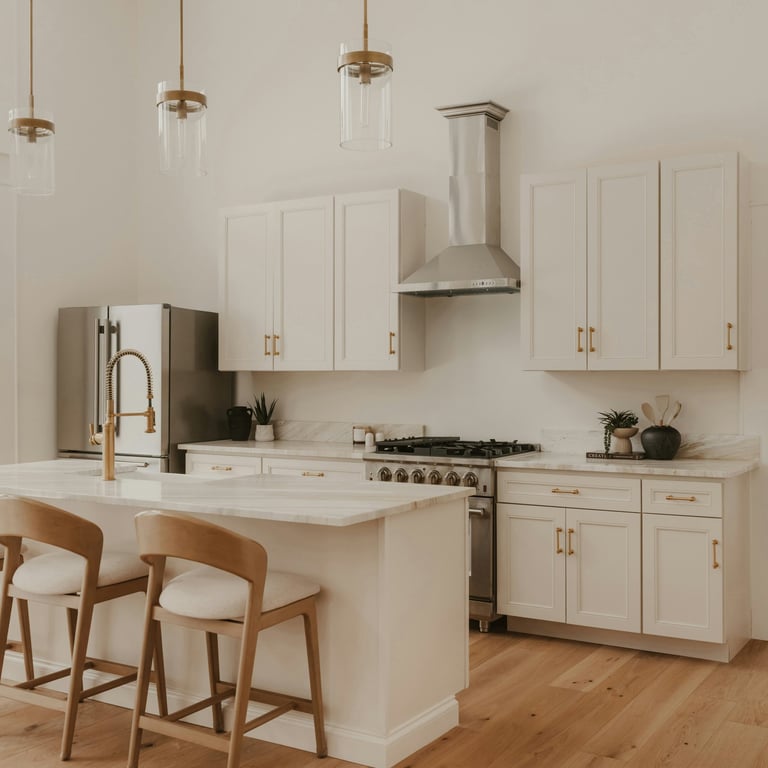
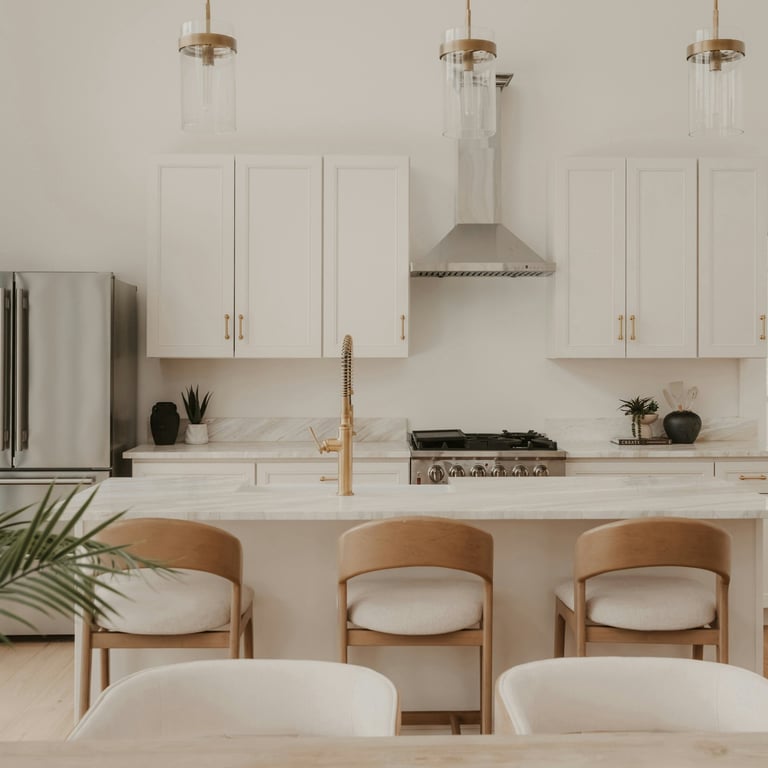
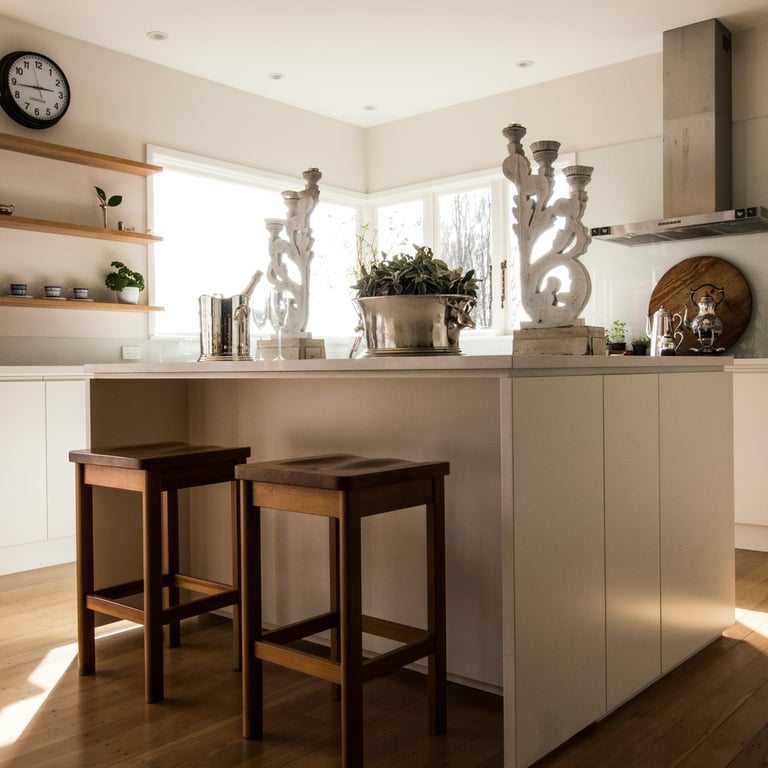
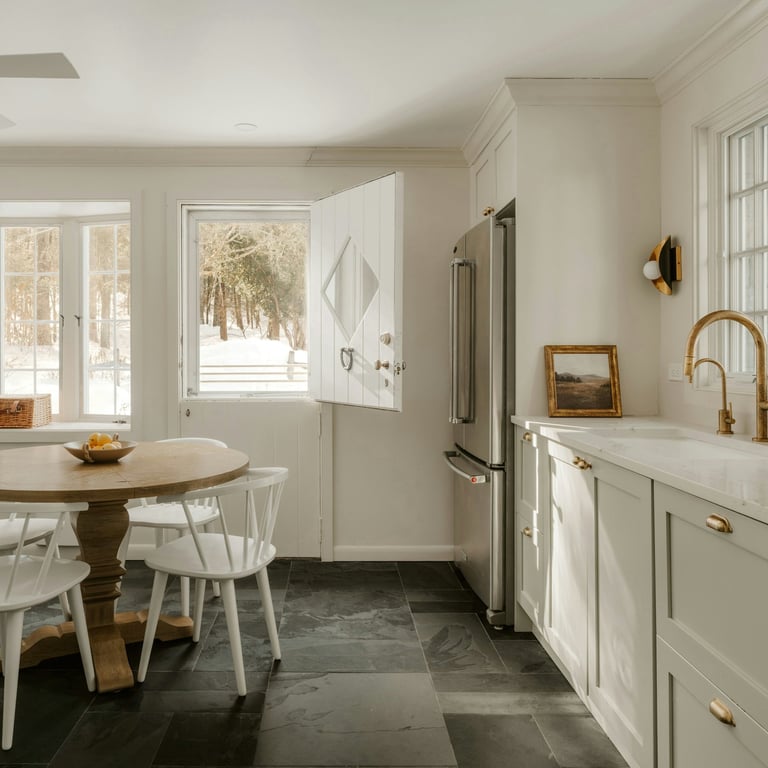
A calm kitchen is a kitchen where every visible element has earned its place. Where the materials speak to each other rather than competing. Where the light is warm rather than clinical. Where what you can see is intentional, and what would create noise is stored or contained.
The kitchen has more categories of visible objects than any other room in a home. Equipment, ingredients, utensils, cleaning products, small appliances, paper, packaging, plants, artwork, cookbooks. The challenge is not that kitchens are inherently chaotic. The challenge is that the kitchen’s job involves things that would create visual noise in any other room, and most kitchens have never been edited with that in mind.
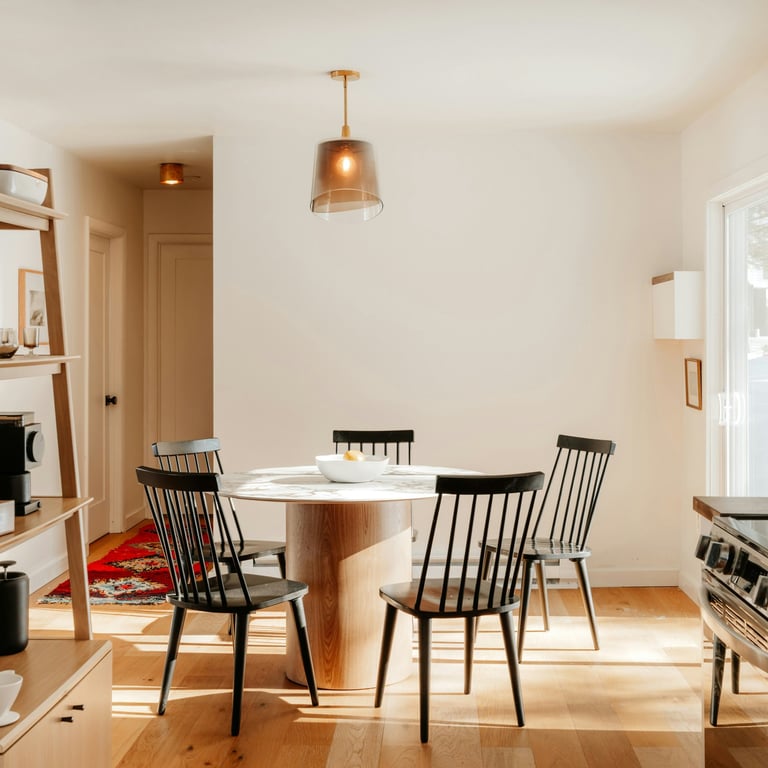
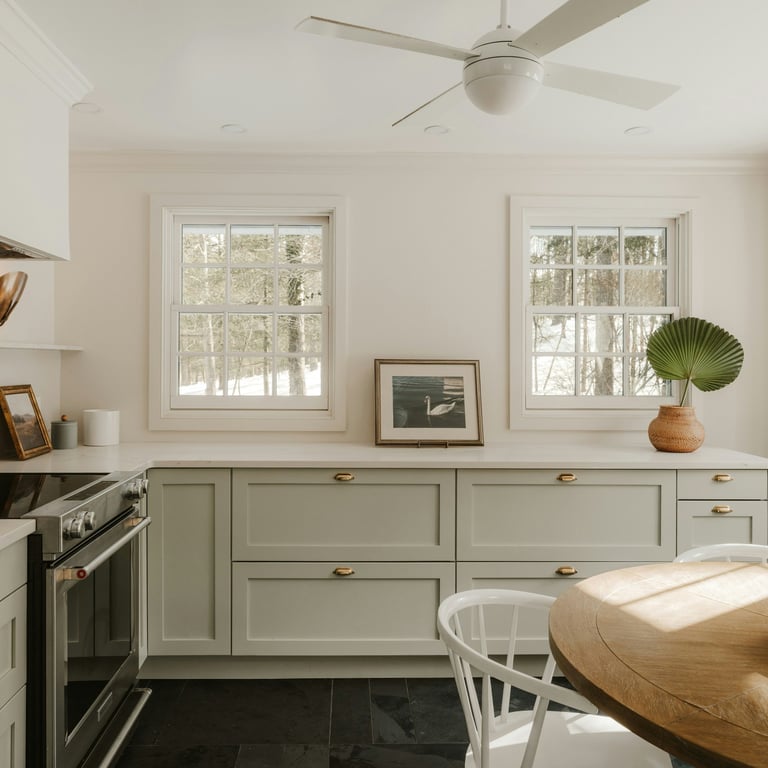
Six Reasons Your Kitchen Feels Chaotic
1. Too much is visible on the counters
The counter is the most valuable visual real estate in a kitchen, and most kitchens treat it as a landing zone.
A toaster that is used twice a week. A coffee machine that is used daily but could live somewhere more intentional. A fruit bowl overflowing with things at different stages of ripeness. A stack of papers that has not quite found its home. A block of knives, a bottle of olive oil, three things that were put down and never moved.
Each of these items has a reason to be there. None of them, individually, is a problem. Together they create a surface that reads as cluttered regardless of how clean the kitchen is, because visual noise is cumulative. Ten reasonable things on a counter create the same feeling as one unreasonable pile.
The counter rule is simple: only items used daily earn permanent counter space. Everything else has a home inside a cupboard, a drawer, or a dedicated appliance area. Apply this rule once and the kitchen will look calmer within the hour.
2. There is no material thread
A kitchen that feels calm has a material thread running through it. Not a matching set, not a coordinated collection, but a quiet repetition of one or two materials that gives the eye somewhere to rest.
Warm wood appearing in chopping boards, a stool, and a utensil handle. Matte ceramic in the dishes, a small jug, and a soap dispenser. Brushed brass in the tap, the handles, and a single pendant. When a material appears more than once, the eye reads the kitchen as considered. When every object is a different material in a slightly different finish, the eye reads it as assembled.
Look at what is currently on your counters and open shelves and count how many distinct materials are visible. If the number is high, that is almost certainly a significant part of the chaotic feeling. Choose one or two materials you already have the most of and edit everything else toward them.
Amazon - Matching Kitchen Appliance Set
Toaster and kettle sets in matte black, white, or cream. One of the highest-impact visual changes in a kitchen.Amazon - Neutral Dish Soap Dispensers
Replacing mismatched cleaning product bottles with matching dispensers is one of the easiest visual clutter fixes.Amazon - Matching Food Storage Containers
Glass or ceramic containers in matching sets replace the visual noise of mismatched plastic.West Elm - Kitchen Textiles
Matching dish towels and oven mitts in calm neutral tones create a consistent thread across the kitchen without a full redesign.Amazon - Neutral Kitchen Towels Set
Linen or cotton dish towels in matching neutral tones, highly searched, affordable entry point.
3.The open shelving has not been edited
Open shelving is either an asset or a liability, and the difference is entirely in the editing.
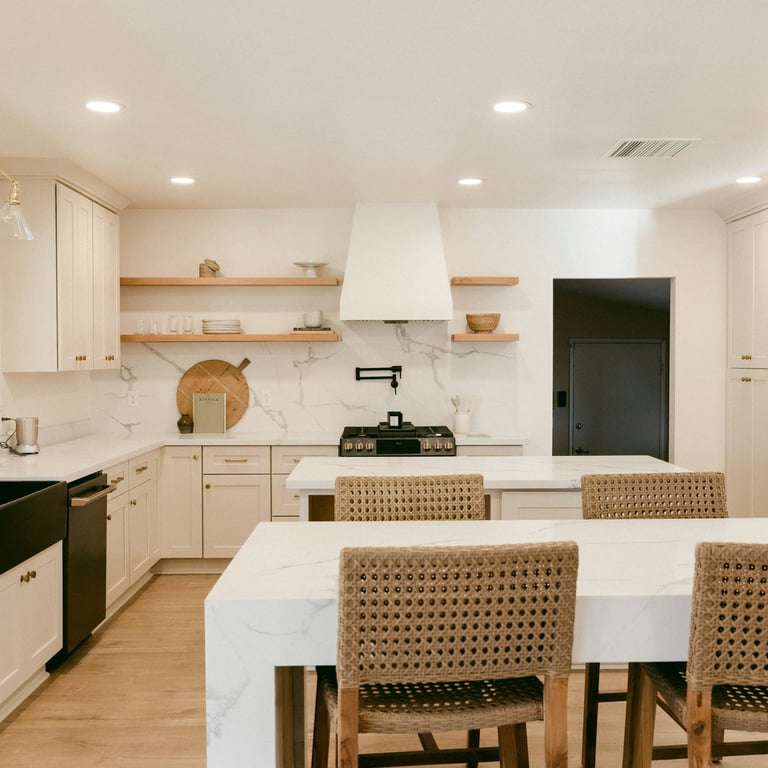
Beautifully edited open shelving, where every object is intentional and there is breathing space between things, makes a kitchen feel calm and personal. Unedited open shelving, where things are stored because they fit rather than because they belong, makes a kitchen feel like a storage unit with the door removed.
The test for open shelving is simple: if you removed every item from the shelf and only put back what was genuinely beautiful or genuinely necessary, what would stay? Start with that edit. Group like things together, leave space between groups, and allow the shelf to breathe. Shelving that is sixty percent full looks intentional. Shelving that is one hundred percent full looks like overflow.
4. Packaging is visible
Packaging is designed to be noticed. That is its entire job. Bright colours, bold text, competing graphics, brand names in large print. And most kitchens have a significant amount of packaging visible at all times.
Cereal boxes on top of the fridge. Washing up liquid with its logo facing outward. A collection of bottles and jars in different sizes and finishes lined up on a shelf. Each of these is designed by a marketing team to attract your eye. In a kitchen, where the goal is calm and visual rest, they do the opposite of what you want.
Decant what can be decanted. Move what can be moved inside a cupboard. Turn bottles so the labels face the back. These are small changes that make a disproportionate difference to how calm a kitchen feels, because removing designed-to-attract-attention objects from the visual field immediately reduces noise.
Amazon - Airtight Kitchen Canisters Set
Matching ceramic or glass canister sets for decanting dry goods. One of the most searched kitchen purchases.Amazon - Kitchen Counter Organizer
Catch-all trays and organizers for keeping what stays on the counter contained and intentional.West Elm - Kitchen Storage
Design-led canisters and storage in calm neutral tones.Amazon - Lazy Susan Turntable Organizer
Practical, widely searched, keeps cabinet contents accessible without visual chaos.Wayfair - Kitchen Canisters and Storage
Wide selection at every price point, easy to filter by material and finish.
5. The lighting is harsh
Kitchen lighting is almost always functional rather than calm, and that distinction matters more than most people realize.
Bright overhead lighting, particularly cool-toned fluorescent or LED lighting, creates a clinical quality that is at odds with the warmth a kitchen should have. It removes shadow and depth, flattens the space, and signals efficiency rather than ease. A kitchen lit this way never feels relaxed, regardless of how beautiful the surfaces are or how carefully the counters have been cleared.
The fix is not to make the kitchen dark. It is to layer the light. Under-cabinet lighting that illuminates the counter without flooding the room. A warm pendant over the island or dining area if there is one. Warmer-toned bulbs replacing cool-white ones. These changes shift the kitchen from a working environment to a space that feels good to be in, and they make everything in it look better too.
Amazon - LED Under Cabinet Lighting Warm
Plug-in strip lights in warm tones, no hardwiring required, one of the most impactful kitchen lighting changes available.Amazon - Puck Lights Under Cabinet Warm
Individual puck-style lights, easier to position than strips, good for readers who want flexibility.Wayfair - Under Cabinet Lighting
Wider selection including hardwired options for readers who want a more permanent solution.Amazon - Warm LED Bulbs for Kitchen
Replacing overhead kitchen bulbs with warm white at 2700K is the cheapest and fastest lighting fix available.AllModern - Kitchen Lighting
Mid-range pendant and overhead options for readers who want to upgrade their main kitchen light source.
6. Too many competing materials
This is a deepening of point two, but it deserves its own space because it is perhaps the most common reason a carefully considered kitchen still feels restless.
A kitchen that has stainless steel appliances, brass handles, chrome taps, black matte fixtures, and warm wood all in the same visual field has not chosen a direction. It is trying to accommodate everything that felt right in isolation, and the result is a space where nothing quite settles.
The solution is not to replace everything. It is to choose one metal family and let the others retire gradually. Warm metals: brass, bronze, gold tones, copper. Cool metals: chrome, nickel, stainless, gunmetal. Pick one family and move toward it over time. Even partially, even imperfectly, the coherence that begins to emerge changes how the kitchen reads.
How to Start Fixing It
Clear the counters first
Before anything else, clear every counter surface completely. Wipe them down so they are genuinely empty. Then, one by one, bring back only what is used every single day. The coffee machine if you use it daily. The kettle. One small dish for everyday essentials. Nothing else earns permanent counter space.
This exercise is useful because it makes the decision active rather than passive. Instead of deciding what to put away, you are deciding what to bring back. And the bar for bringing something back, once the counter is clean and calm, is significantly higher than the bar for leaving something that was already there.
Edit for one material thread
Look at what remains on your counters and open shelves and identify the one or two materials that appear most naturally. Warm wood, matte ceramic, clear glass. Make those your thread and store or remove everything that competes with them. You do not need to buy anything new for this step. You need to subtract what does not belong.
Edit the open shelves
Take everything off at least one open shelf and start again. Put back only what is either genuinely beautiful or genuinely necessary, with breathing space between groups. If the shelf looks more settled with fewer things on it, that is your answer. Keep going.
Decant what attracts attention
Choose one category of packaging that is currently visible and address it. Decant your dry goods into matching jars. Put the washing up liquid in a dispenser. Move the cereal boxes inside the cupboard. One category, done well, has an immediate effect on the visual temperature of the kitchen.
Address the light last
Once the counters are clear and the materials are edited, change the light. Replace cool-white bulbs with warm white. Add one warm pendant or under-cabinet strip if the budget allows. Assess the kitchen in the evening with only the warm light on and notice how different it feels from the same space lit by overhead fluorescents.
Save This: Five Rules for a Calmer Kitchen
Only items used daily earn permanent counter space. Everything else lives in a cupboard.
Choose one or two materials and let them be the thread that runs through what is visible.
Open shelving should be sixty percent full at most, with breathing space between groups.
Packaging is designed to attract attention. Move it inside cupboards or decant it.
Warm light at different heights always over a single bright overhead source.
Apply these in order before buying anything new. The kitchen you already have is capable of feeling significantly calmer.
Final Thought
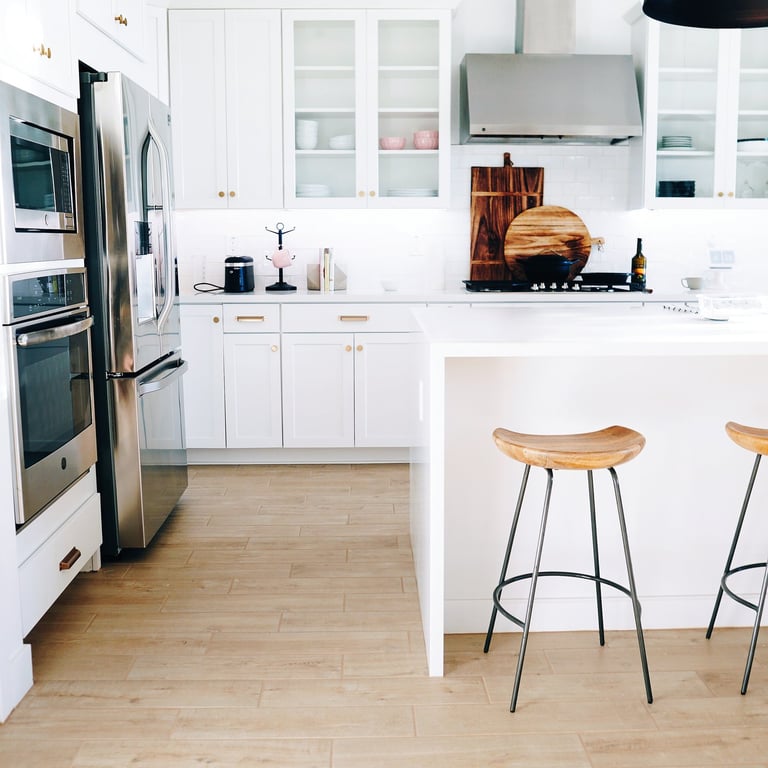
Kitchen calm is not about having less. It is about being intentional about what is visible.
When the counters hold only what earns its place, the materials speak quietly to each other, the shelves have room to breathe, the packaging is out of sight, and the light is warm rather than clinical, the kitchen changes character entirely. Not because anything significant has changed, but because the visual noise has been addressed at its source.
That is not a renovation. It is an edit. And it costs almost nothing except the willingness to decide what stays and what does not.
Next week we move to the entryway. The room that shapes how you feel about your entire home before you have even taken your coat off, and why most entryways are failing quietly.
Stay Elevated,
The Adair Lane.