Why Your Entryway Sets the Wrong Tone for Your Whole Home
5/3/20268 min read
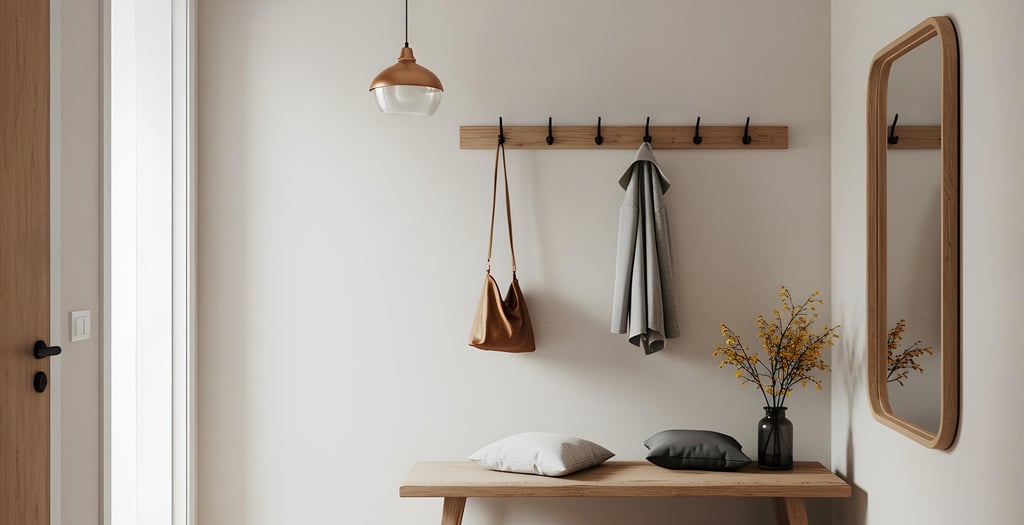
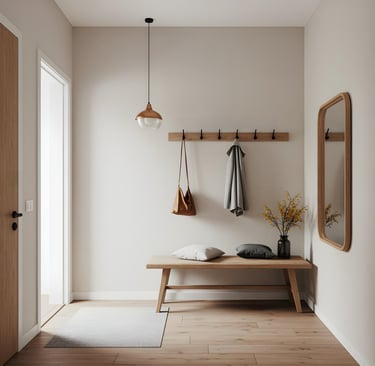
There is a moment, just after you close the front door, when your home either receives you or it doesn’t.
It happens before you have taken your coat off, before you have checked the kitchen, before you have done anything at all. The entryway makes its impression in seconds and that impression shapes how you feel about your home for the rest of the evening.
Most entryways fail at this. Not because they are particularly messy or badly designed, but because they have never been treated as a room at all. They are treated as a corridor. A landing strip. The place before the home starts. And so they communicate transition without arrival, function without welcome, and effort without ease.
The entryway is a psychological threshold. Every time you cross it, your brain is deciding how to feel about what comes next. An entryway that is cluttered, dark, and visually unresolved tells your brain that home is more of the same. An entryway that is clear, warm, and intentional tells it something different.
This is the eighth post in the room-by-room series. We have looked at why your home feels messy even when it’s clean, visually busy, almost-right but unresolved, cold rather than cosy, at why your living room never feels calm, why your bedroom doesn’t feel restful, and why your kitchen always feels chaotic. This week: the entryway, and why it matters more than most people realise.
Five Reasons Your Entryway Is Setting the Wrong Tone
1. There is clutter with nowhere to go
The entryway accumulates because it is the first place you stop when you come in, and stopping creates putting-down. Coats, bags, shoes, keys, post, shopping, things that need to go elsewhere later. Each of these has a reason to be there temporarily. None of them has a permanent home.
When the entryway fills up because nothing in it has a designated place, the clutter is not a discipline problem. It is a storage problem. People put things in the entryway because there is nowhere else for them to go, and they stay there because moving them requires a decision that does not always get made in the moment of arriving home.
The fix is not to stop putting things down. It is to give everything that gets put down a specific place to go. A hook for each coat. A tray or basket for shoes. A bowl or hook for keys. A specific surface or basket for post and bags. When everything has a home, the entryway can be cleared in thirty seconds rather than requiring an effort of will.
Goo-Ki - Antique Brass 5-Hook Wall Coat Rack
Individual brass hooks on a minimal backplate. Warm finish, clean look.
ROOMTEC - Narrow Console Table with Storage
Solid natural wood with a lower shelf. Slim enough for tight entryways.
Wayfair - Upholstered Entryway Bench with Shoe Storage
Linen seat with open shoe shelving beneath. Functional and soft.
HANKOR - Ceramic Key Dish
Small white ceramic catchall. Sits quietly without competing with anything.
2. There is no intentional anchor
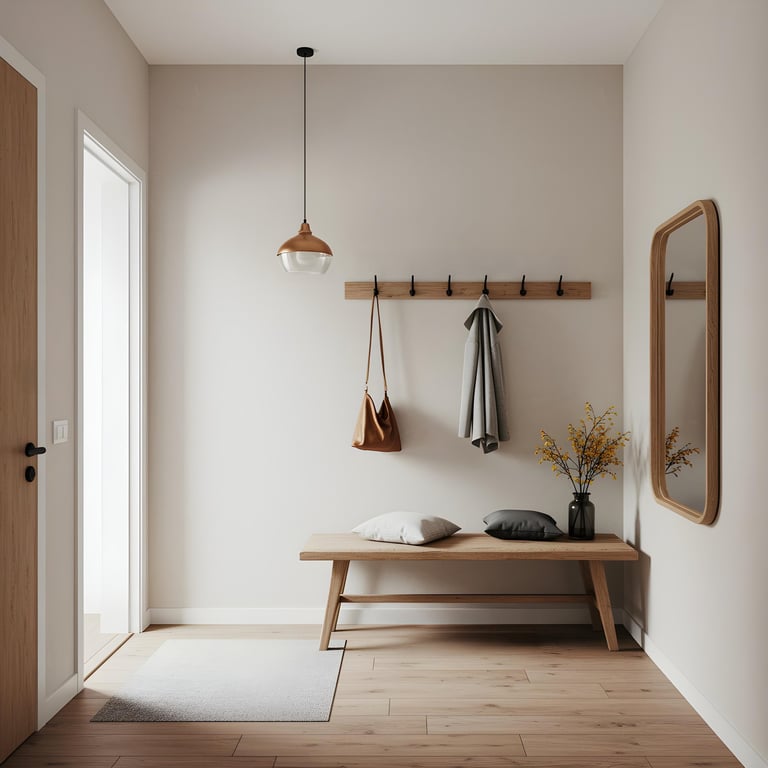
An anchor in an entryway is the visual element that makes the space feel like it was designed rather than assembled. In a living room, the anchor is usually the sofa or fireplace. In a bedroom, it is the bed. In an entryway, it might be a console table, a large mirror, a piece of art, or a combination of a coat rack and a bench.
When there is no anchor, the entryway reads as a thoroughfare. Somewhere to pass through rather than somewhere that belongs to the home. The eye has nowhere to land, nothing to tell it that this space was considered.
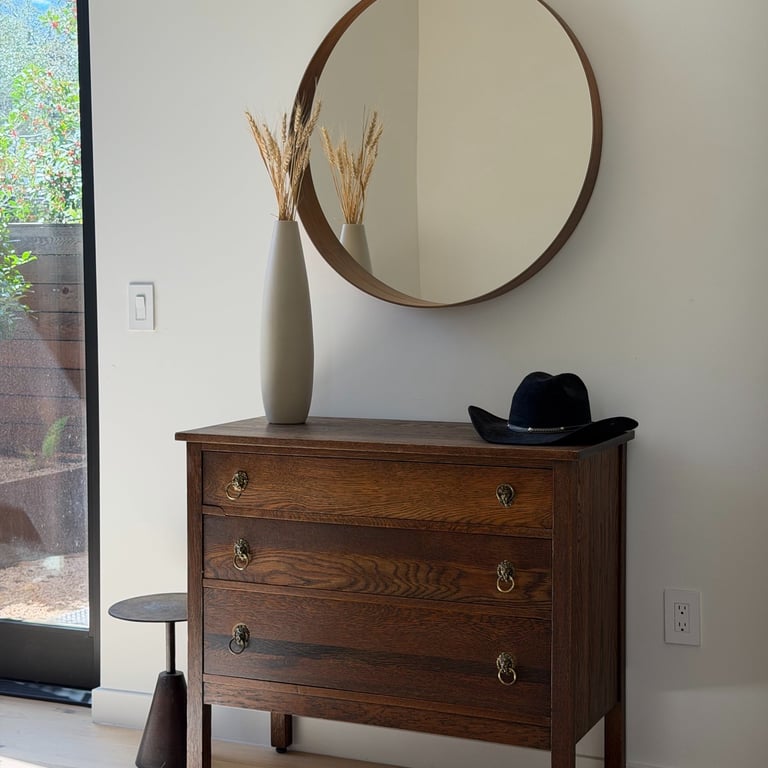
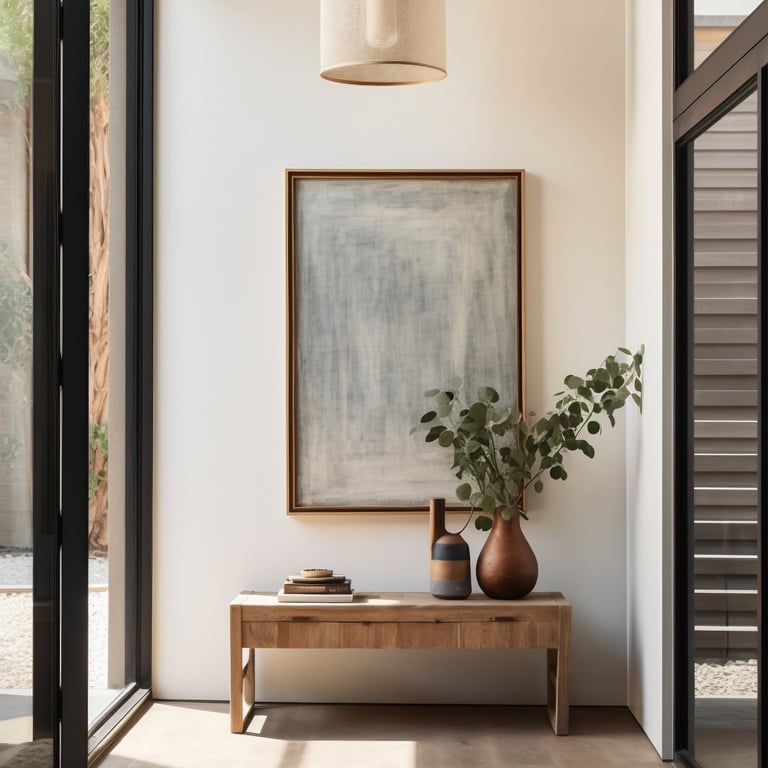
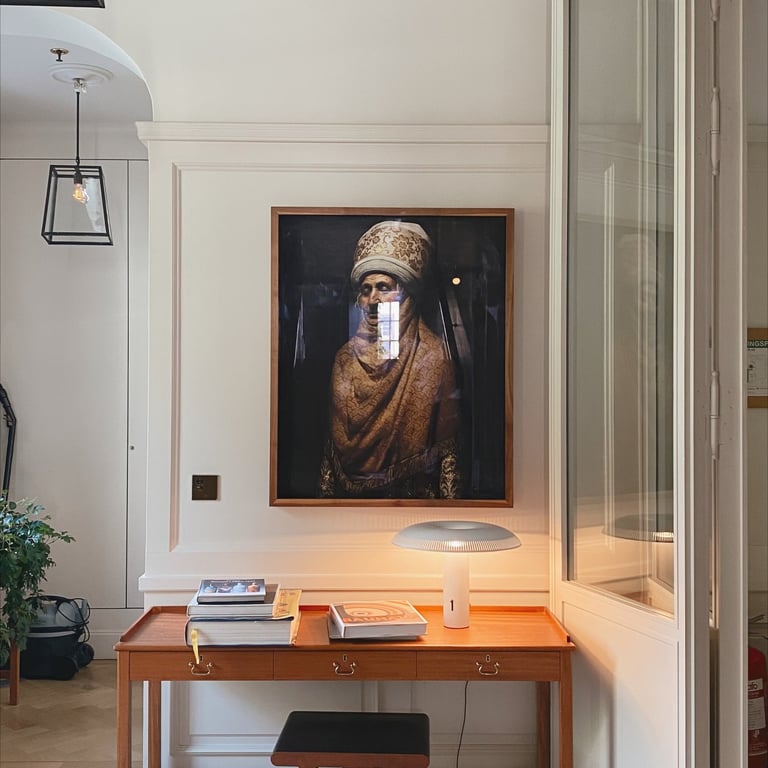
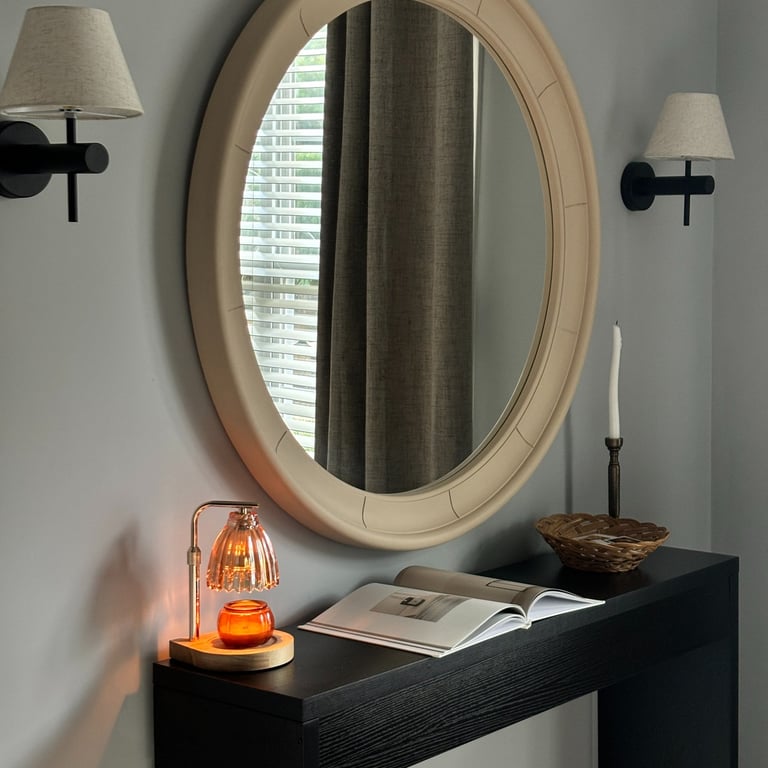
An anchor does not need to be expensive or dramatic. A narrow console table against the wall with a lamp on one end and a small object on the other is enough to give the eye a point of arrival. A mirror above it doubles the light and makes the space feel larger. One piece of art hung at eye level signals that this room was worth paying attention to. Any one of these works. The anchor is the decision to treat the entryway as a room rather than a gap.
YAMAZAKI Home - Slim Console Table with Hooks
Only 7 inches deep with a warm wood top. Built-in hooks, works in very narrow spaces.
MOTINI - Brushed Brass Round Wall Mirror
Warm brass circular frame. Works above a console or alone on a small wall.
Niccy - Walnut Wood Frame Full-Length Mirror
Deep walnut frame, can lean or hang. Brings warmth and proportion to a narrow entry.
West Elm - Wall Hooks Collection
Well-made hooks in warm metal finishes with optional shelf additions.
3. The lighting is functional rather than welcoming
Most entryways are lit by a single overhead light. Practical, sufficient, and completely wrong for a space whose job is to make you feel welcome.
Overhead lighting in an entryway creates the same clinical flatness it creates anywhere else: equal brightness across the whole space, no warmth, no depth. It says utility rather than welcome. It is the lighting of a corridor, not of a threshold.
A warm lamp on a console table changes the entryway more than almost any other single addition. It creates a pool of warmth that greets you when you open the door rather than a flat field of light that assesses you. Combined with a warm-toned bulb in the overhead fitting or a wall sconce at a lower height, it transforms the entryway from functional to felt.
HYDELITE - Brass Swing Arm Wall Sconce with Linen Shade
Plug-in or hardwired. Warm brass arm and soft linen shade.
LUXRITE - A19 LED 2700K Warm White Bulbs, 4-Pack
Dimmable, enclosed-fixture rated. The simplest fix for a harsh overhead.
Cordless Table Lamp - Linen Shade, Wood Base
Battery-powered with 2700K warm setting. Good for entryways with no nearby outlet.
4. There is no sensory welcome
A home that feels good to return to has something of a sensory signature. A particular scent, a texture that greets your hand, a warmth underfoot, a softness at eye level.
Most entryways have none of this. They are hard surfaces, bare floors, and whatever smell happens to have accumulated behind the front door. They are neutral in a way that reads as unwelcoming, because neutrality in a space that is supposed to say welcome functions as absence.
One sensory element is enough. A diffuser with a scent that belongs specifically to this house. A small rug that gives warmth underfoot the moment you step in. A textured object on the console, a ceramic bowl or a woven basket, that gives the hand somewhere to land. A plant in good condition. None of these need to be expensive or elaborate. One is enough to shift the entryway from corridor to threshold.
LOVSPA - Palo Santo Reed Diffuser
Warm wood, amber, soft musk. Grounding rather than sweet.
Benevolence LA - Lavender and Eucalyptus Reed Diffuser
Clean and calming. A straightforward scent that works well as a first impression.
Target - Entryway Key Bowl Browse
A solid range at accessible prices for readers who want a simple neutral option.
5. The entryway was the one room nobody bothered to style
Living rooms get considered. Bedrooms get styled. Kitchens get organised and reorganised. The entryway gets whatever was left over.
It is the room that most people treat as too small, too transitional, or too functional to be worth proper thought. And so it accumulates things that do not belong anywhere else, gets lit with a single bare overhead bulb, and never quite reads as part of the home rather than the space before it.
Treating the entryway as a room, even a very small one, changes everything. It deserves one anchor, one light source that creates warmth, one sensory element, and enough storage to keep it clear. These four decisions transform an afterthought into an arrival, and the arrival sets the tone for everything that follows.
What an Entryway Is Actually For
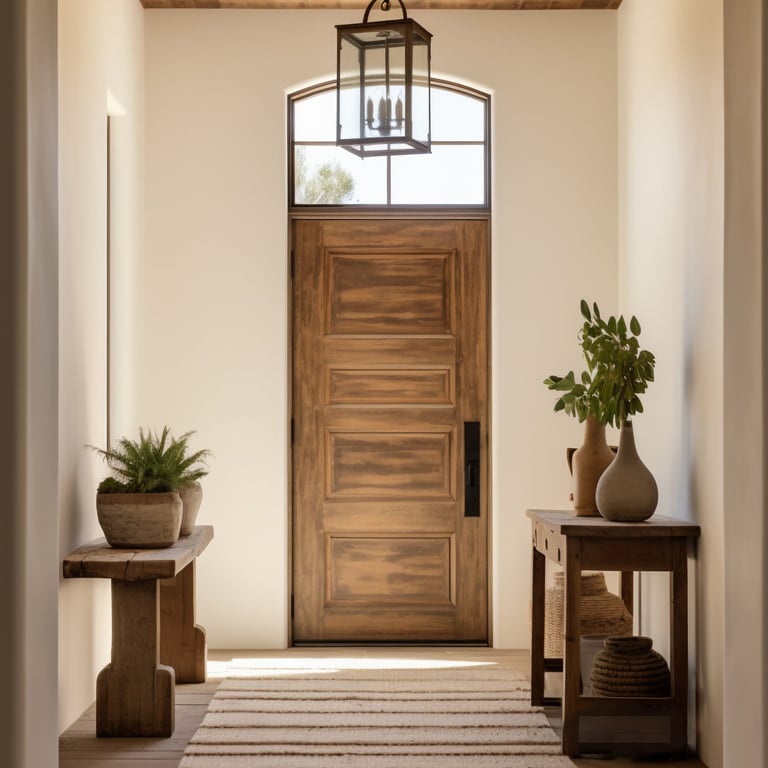
An entryway is a transition. Its job is to move you from the world outside to the life you are returning to, and to signal clearly that the shift has happened.
When it does this well, you cross the threshold and something releases. The mental noise of the outside world quiets. You are home, and the home knows it. When it does not, you walk in and the outside world follows you. The clutter, the coat that has no hook, the shoes piled by the door, the bag you put down three days ago: all of it is still there, still asking for something, still adding to the background load.
The fix is not a renovation. It is understanding what the entryway is supposed to do and giving it the elements it needs to do it.
How to Fix Your Entryway
Give everything a home first
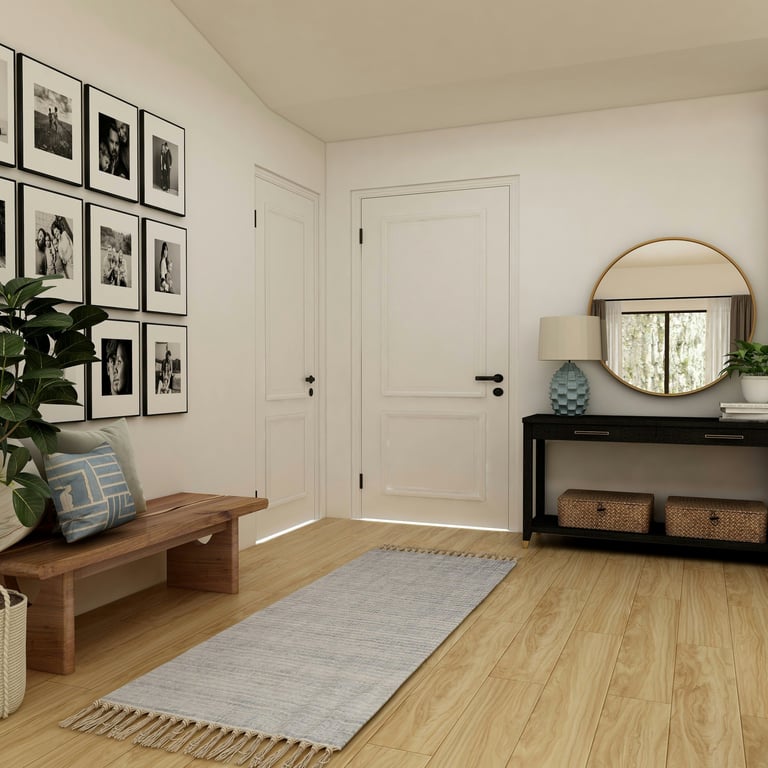
Before anything else, identify what regularly arrives in the entryway and give each category a specific place. Coats on hooks, not over the banister. Shoes in a basket or on a low shelf, not piled by the door. Keys in a bowl or on a hook, not on whatever surface is nearest. Post and bags in a specific spot. When storage exists for everything that comes in, the entryway can be maintained without effort rather than managed with willpower.
Choose one anchor
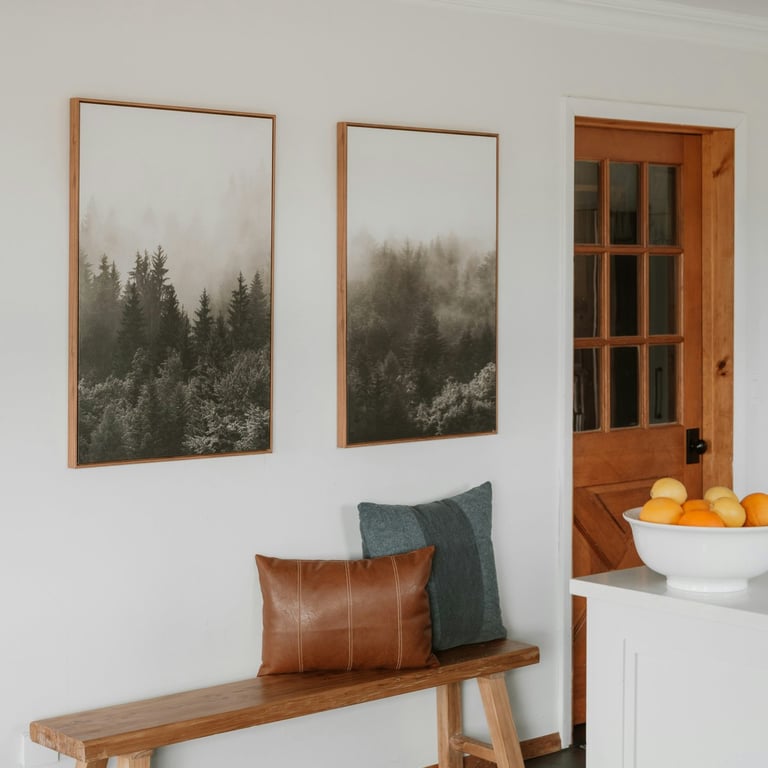
Identify the largest flat wall in the entryway and choose one piece to anchor it. A narrow console table if the space allows. A row of hooks with a shelf above if it does not. A single large mirror if the table is not possible. A piece of art at eye level if nothing else fits. The anchor does not fill the space. It gives the eye somewhere to arrive, and that arrival is what changes the feeling of the room.
Add one warm light source
Add a lamp to the entryway before doing anything else decorative. A small table lamp on the console, a wall sconce at a lower height than the existing overhead, a pendant in a warmer-toned fitting. Any one of these shifts the entryway from functional to welcoming. Replace the overhead bulb with a warm white at 2700K as a minimum if nothing else is possible right now.
Introduce one sensory element
Choose one thing that gives the entryway a sensory signature. A diffuser with a scent you associate specifically with being home. A small rug that gives warmth underfoot. A textured object that the hand finds naturally when reaching for keys. A plant in good condition. One is enough. The entryway only needs to say welcome once, clearly, and it does not need to say it with many things.
Keep one surface clear
Once the storage is in place and the anchor is established, identify the primary surface in the entryway and hold it clear. Not empty, but clear. One lamp. One small object. A key bowl if keys are kept there. Everything else is stored or does not belong in the entryway at all. A clear surface is what allows the eye to arrive without immediately finding something that needs attention.
Save This: Five Rules for a Welcoming Entryway
Every item that arrives in the entryway has a specific home to go to.
One anchor gives the eye a point of arrival: a console, a mirror, a piece of art, or a coat rail with presence.
One warm light source creates welcome rather than utility.
One sensory element gives the entryway its signature.
One clear surface holds nothing except what belongs there permanently.
Apply these before adding anything decorative. The entryway that functions well looks and feels better than one that is styled but does not work.
Final Thought
The entryway is the smallest room in most homes and the one that does the most work.
Every time you come home, it is performing. Setting the tone, making the transition, signaling whether what follows is going to feel like relief or more of the same. Most people have never thought about it in these terms, which is why most entryways are not doing their job.
Give it a home for everything that comes in. Give it one thing to look at, one warm light, one sensory element, and one clear surface. That is all it needs. And the difference in how the home feels from the moment you open the door is immediate.
Next week we look at the cohesion problem: why your home does not feel like yours even though you have decorated every room.
Stay Elevated,
The Adair Lane.