Why Your Home Doesn't Feel Like Yours
5/10/20268 min read
You have decorated every room. You have made choices, bought things, arranged and rearranged. And still, when you walk through the front door, something is missing.
It does not feel like a home that belongs to you. It feels like a stage set, or a rental that has been reasonably furnished, or a collection of individually considered rooms that somehow do not add up to a place. You recognise everything in it. You just do not quite recognise yourself.
This is one of the most common and least talked-about problems in home decorating. Not that the home is wrong, exactly. Just that it does not feel right. That it looks like someone could live there without quite looking like you live there.
The reason is almost never a lack of things. It is a lack of thread. The invisible connective tissue that makes a home feel like a single coherent place rather than a series of decorated rooms.
This is the ninth post in the room-by-room series. We have looked at why your home feels messy even when it's clean, visually busy, almost-right but unresolved, cold rather than cosy, why your living room never feels calm, why your bedroom doesn't feel restful, why your kitchen always feels chaotic, and why your entryway sets the wrong tone . This week: the meta-problem that sits above all of them.
What It Actually Means for a Home to Feel Like Yours
A home feels like yours when there is coherence between the rooms, and between the rooms and the person who lives in them. Not matching, not matchy-matchy, not themed. Coherent. The rooms feel like they belong to the same place, and that place feels like it belongs to you.
This coherence comes from repetition. Two or three materials that appear throughout. A consistent feeling of colour, even if the actual colours vary. One or two personal objects in each room that signal someone specific lives here. The absence of things that were never really chosen, just accumulated.
When this is missing, the home reads as a collection of individual purchases rather than a considered place. Every room might be fine on its own. Together, they do not add up to anything.
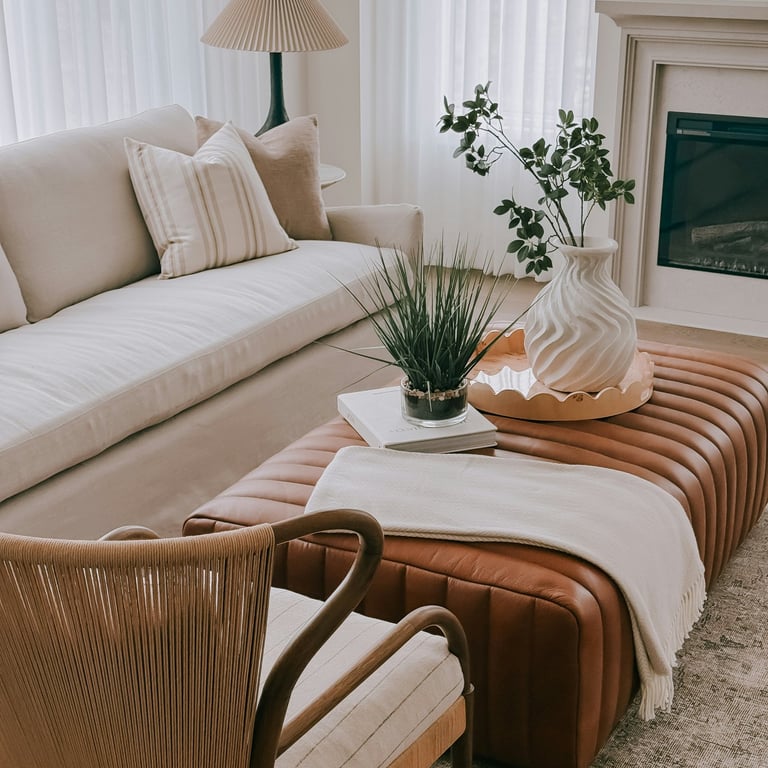
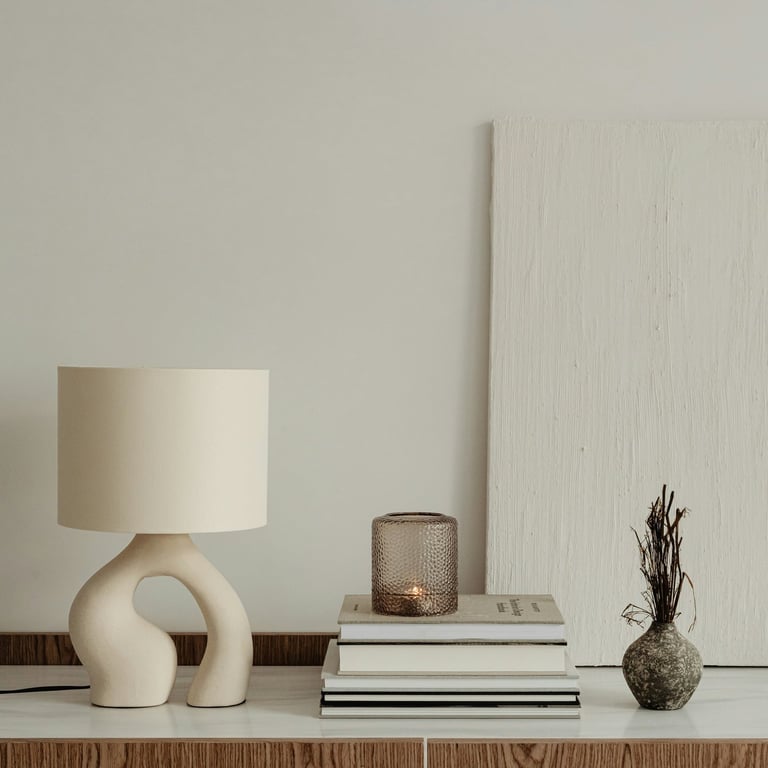
Five Reasons Your Home Doesn't Feel Like Yours
1. Every room was decorated separately
The living room was done first, when you moved in and needed something on the walls. The bedroom came next, when you found a rug you liked. The kitchen was handled in stages over several years. Each room was considered on its own terms, in response to whatever problem or budget existed at the time.
When rooms are decorated separately, they develop separate personalities. The living room is warm and textured. The bedroom is cooler and more minimal. The hallway is still waiting for something to happen. None of them have spoken to each other because they were never asked to.
A home that feels coherent has been considered as a whole, even if it was assembled over years. Not matching, but connected. The same two or three materials reappearing in different forms. A consistent temperature of colour. A sense that the same person made all the decisions, even if those decisions were made across different seasons and different budgets.
2. You bought by trend rather than by instinct
A few years ago, everything was grey. Then it was sage green. Then warm terracotta. Then limewash. Then boucle everything. If you have been decorating across the last decade, there is a reasonable chance that you have at least one object from each of these moments, and that those objects do not particularly agree with each other.
Trend-led buying is seductive because trends feel like permission. Everyone is buying this, which means it is safe, which means it is allowed. But trends are not personalised. They do not know what your other rooms look like, what materials you are already working with, or what the particular quality of light in your house is.
Instinct-led buying is slower. It requires knowing what you are already drawn to before you go looking, and checking new purchases against that before you commit. But what it produces is a home that has a point of view rather than a chronology of good taste.
3. There are no personal objects given real estate
A showroom is decorated but not personal. Every surface is considered, every object is beautiful, and nothing would tell you anything about whoever lives there. A home that feels like yours has at least one thing in every room that would not be in anyone else's home: a photograph taken somewhere meaningful, a ceramic you bought on a trip, a book kept out because you actually return to it, an object passed down or found or made.
Most people have personal objects. They are in boxes, on windowsills, in drawers, grouped in corners where they have been put out of the way. They are not given prominence because they do not feel decorative enough, or because the right place for them has never quite materialised.
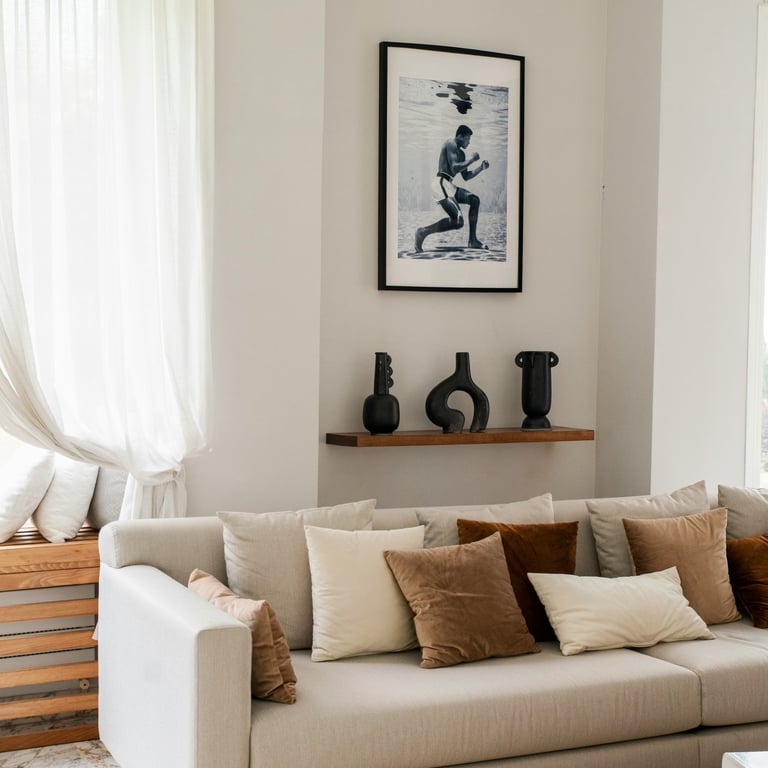
Personal objects do not need to be beautifully designed. They need to be genuinely yours. A single photograph well framed on a shelf changes the feeling of a room more than almost any purchased object could, because it signals that someone lives here. That signal is what a home needs most.
HAUS AND HUES - Natural Wood Gallery Frame Set, 6-Pack
Solid oak frames in assorted sizes. Clean neutral finish that works with anything.ArtbyHannah - Gallery Wall Frame Set, 8-Pack Assorted Sizes
Pre-cut mat, wall template included. Takes the guesswork out of arranging.Dreamland - 22x28 Natural Oak Wood Picture Frame
USA-sourced white oak, tempered real glass. Statement frame for a single meaningful image.
4. There is no consistent material running through the home
Material coherence is one of the quietest and most powerful tools in home decorating. When the same two or three materials appear across multiple rooms, a home feels connected even if nothing else is particularly coordinated. The linen cushion in the living room, the linen curtain in the bedroom, the linen runner in the hallway. They do not match. They rhyme.
Most homes do not have this. They have whatever was available at the time: the cotton duvet that was on sale, the synthetic throw that came in the right colour, the jute rug that seemed to work. Each individual piece might be fine. Together, they create a material noise that reads as inconsistency rather than intention.
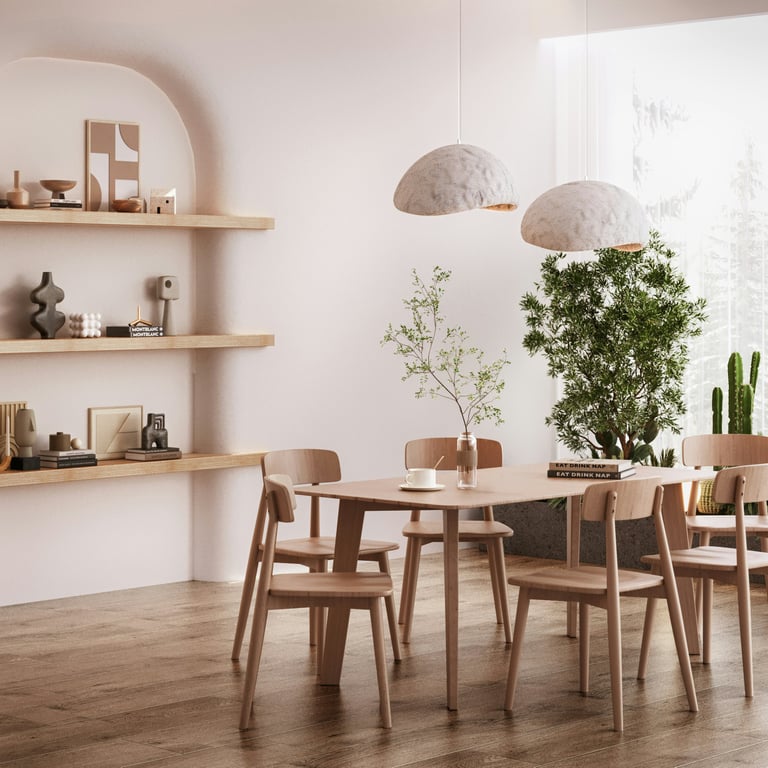
Choosing two or three materials you genuinely love and then being slightly obsessive about finding those materials wherever possible is one of the most effective things you can do for the coherence of a home. Linen and wood. Ceramic and cotton. Rattan and linen. The specifics matter less than the repetition.
Chezmoi Collection - Brussels Belgian Flax Linen Throw
100% Belgian flax, pre-washed, natural undyed linen. The softest entry point into a linen thread.YANGQIHOME - Natural Rattan Storage Baskets
100% natural Vietnam rattan, handcrafted. Works as storage and as a material touchpoint in any room.LuxenHome - Terracotta Ceramic Vase
Sand-textured glaze, matte finish, warm earth tones. A grounding ceramic presence for any surface.Neutral Boho - Matte Ceramic Decorative Vase Set
Soft beige and cream tones, matte finish. A set that works across rooms without competing.
5. The home is full of obligation pieces
An obligation piece is something you did not choose so much as accept. The sofa that was a gift and does not quite fit the room. The art print that was a housewarming present and has been on the wall ever since because it would feel wasteful to take it down. The rug inherited from a relative that is not wrong, exactly, just not yours.
Obligation pieces are almost impossible to decorate around because they carry a fixed quality that cannot be adjusted. You cannot edit them into the room in the way you can edit a piece you chose. They either belong or they do not, and often they do not, and the room never quite settles because of them.
The hardest editing work in decorating is not identifying what is missing. It is identifying what should not be there and then actually removing it. Obligation pieces do not need to be discarded. They need to be stored, passed on, or moved somewhere they genuinely work. The space they leave behind is almost always better than the space they occupied.
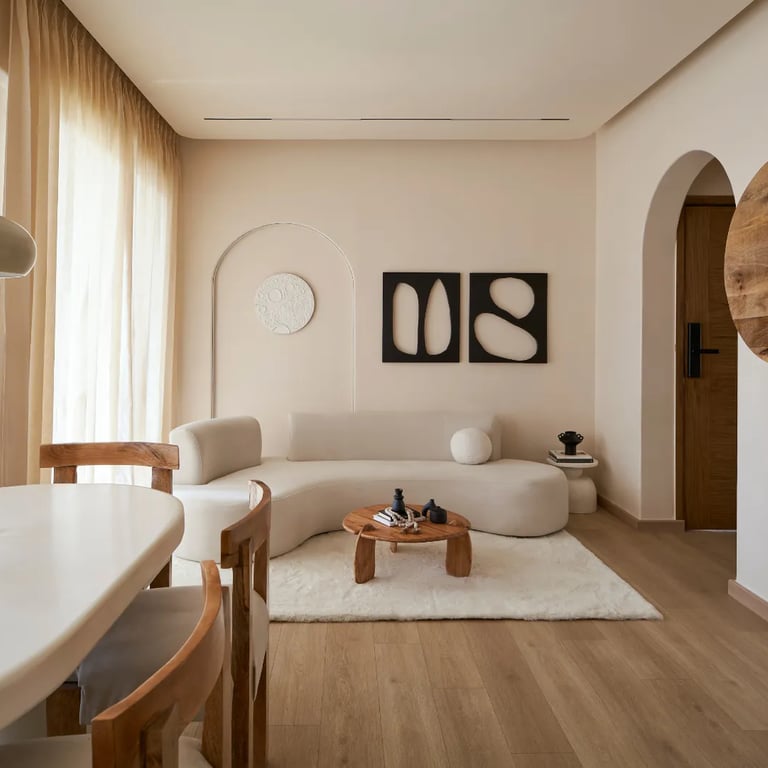
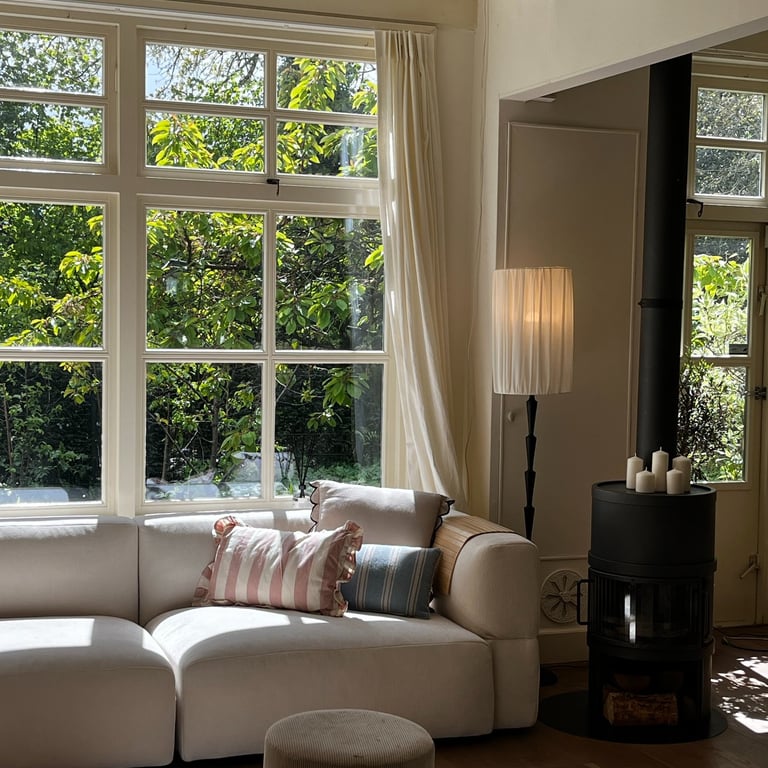
How to Make Your Home Feel Like Yours
Choose your two or three materials and repeat them
Identify what you are already drawn to. Walk through your home and note what materials you have reached for repeatedly, even accidentally. Linen. Wood. Ceramic. Stone. Rattan. Brass. Whatever appears most often is probably telling you something about what you actually like. Choose two or three of these as your thread and then look for them deliberately when making any new purchase. Not everything needs to be in these materials. But everything should at least not contradict them.
Give one personal object real estate in every room
Go through every room and identify whether there is a single object in it that would not be in anyone else's home. If there is not, find one thing that could be. A photograph, well framed and given the best spot on the shelf rather than the corner. A ceramic from a market you remember. An object that means something. Give it the position and space of something important rather than tucking it in alongside things that were purchased for their appearance. One personal object per room is enough to change the feeling of the whole house.
Edit out the obligation pieces, one by one
Start with the room that bothers you most. Identify the one piece in it that you did not choose and that you would not miss if it were gone. Remove it. Not necessarily for good. Just to see what the room feels like without it. Most of the time, the room will feel better. The gap is almost always preferable to the thing that was not yours. Do this one room at a time, one piece at a time, until what remains is mostly chosen.
Stop decorating by room and start thinking about the whole
Before making any new purchase, ask whether it connects to at least one other room in the house. Whether it shares a material, a tone, a quality of finish. Not matching. Rhyming. A new cushion that uses the same linen as the bedroom curtain. A basket that uses the same rattan as the bowl in the hallway. Small decisions made with the whole house in mind accumulate into a home that feels considered rather than assembled.
Decide what the home's feeling is before deciding what it looks like
The homes that feel most like the people who live in them were designed around a feeling first and an aesthetic second. Warm and uncluttered. Calm and a little eclectic. Simple and natural. Quiet and considered. Before making another decorating decision, spend some time identifying what feeling you are working towards. When you know that, the decisions become much easier and the coherence builds itself.
Save This: Five Signs a Home Feels Like Yours
Two or three materials repeat across every room, even if they appear in different forms.
There is at least one personal object given real estate in every room.
Obligation pieces have been removed or moved somewhere they genuinely work.
Rooms feel connected to each other, not just individually considered.
The home has a feeling, not just an aesthetic.
A home that feels like yours is not a home that is full of beautiful things. It is a home where the things that are there were chosen, and where those choices add up to something.
Final Thought
The rooms are done. The problem is the spaces between them.
Coherence is not a decorating problem. It is a decision problem. It is the decision to look at the home as a whole and ask what it is trying to say. To choose a material and repeat it. To give a personal object the position it deserves. To remove the things that were never really yours. None of these decisions require spending money. Most of them require spending time.
A home that feels like yours is not an aesthetic achievement. It is an honest one. It looks like someone specific made it, because someone specific did.
Next week we look at the scale and proportion problem: why your home looks expensive until you look closely, and the simple rules that fix it.